Cardinal Seán's Blog

Cardinal Seán shares his reflections & experiences.

Archive for 2007/07


A very full last week of July

News that casino gambling may be soon legalized in Massachusetts is troubling. A Native American tribe is negotiating with the town of Middleborough the construction of a casino there.

Like most Americans, I am very sympathetic to our Native Americans who in so many cases have been unjustly deprived of ancestral lands and resources. I realize that the government has attempted to compensate them by giving them privileges with regard to gambling. But I am opposed to that project and hope that Middleborough will not approve the proposal the town has received.

The Church’s stance on gambling is a nuanced one. We believe that gambling can be a legitimate form of recreation, like drinking alcohol. But, like alcohol, there are also dangers involved in gambling. Casino gambling, I believe, is fraught with many dangers for a community. First, it drains the resources away from other businesses and activities in the community. Second, it promotes gambling addiction, which is one of the worst addictions and one that is becoming more common. It is an addiction that destroys families and destroys people’s lives. The Church in Massachusetts has always opposed casino gambling for that reason.

If public works and projects in the Commonwealth need to be funded, there should be other ways to do that, perhaps by raising taxes. But relying on casinos makes us gambling junkies, and we become dependent on that money, which will result in many ruined lives, ruined businesses and ruined neighborhoods. So we unequivocally oppose casino gambling in the state.

- – -

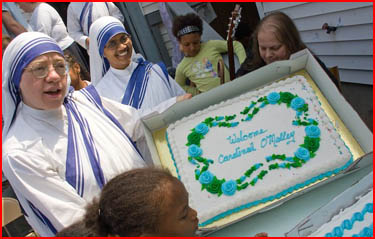
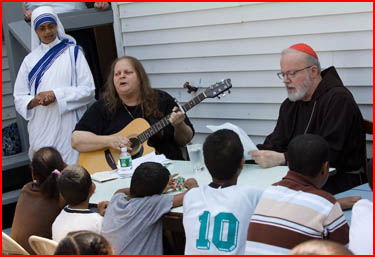
Every summer I celebrate a Mass with the Sisters of Charity and the children in their summer program, held at their facilities in Dorchester. It is always a joy. This year the Mass was on July 25, and there were about 80 children in attendance. It is wonderful to see how the children participate at Mass, singing hymns with such enthusiasm.
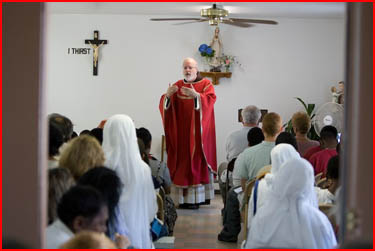
sistersofcharity08.jpg

After the Mass, the sisters had pizza and cake for the kids. The children also sang a number of songs. One was about the “angels watching over me,” and many of the little girls were dressed as angels. It was cute.

sistersofcharity05.jpg

sistersofcharity15.jpg

sistersofcharity07.jpg

sistersofcharity09.jpg

The children really enjoy the summer program and get so much out of it. These are children who otherwise would not have the opportunity for these kinds of activities. They also gain by their exposure to religious training and participation in Mass.

The missionary sisters are always such a wonderful presence in the neighborhoods where they are. Their outreach to people who are economically deprived is beautiful, and they have such a wonderful way of involving many volunteers in their ministry. The volunteers associated with the summer program are quite a cross section. There are some high school students from the suburbs, police officers, musicians, local mothers from the neighborhood. All are working together to ensure the children have a good experience during the program.
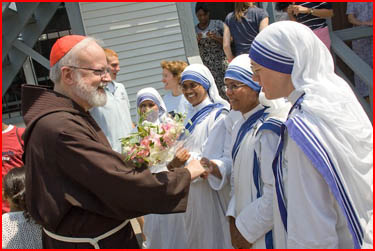
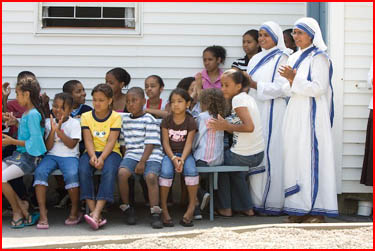
sistersofcharity13.jpg

sistersofcharity11.jpg

- – -

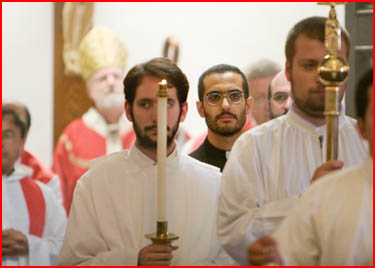
On Wednesday evening, we had the admission to candidacy of Israel Rodriguez which was celebrated at Our Lady of the Assumption parish in East Boston.

Israel is the first candidate to come out of the Redemptoris Mater House of Formation.

We are very pleased. He is a talented and zealous seminarian, and we look forward to the day when he will be ordained a priest for Boston.
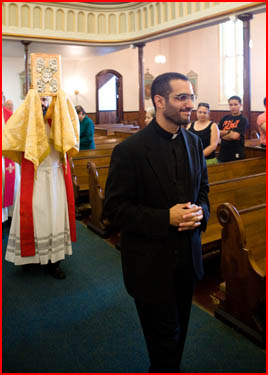
rodriquez_011.jpg

rodriquez_013.jpg

rodriquez_024.jpg

There were a number of priests who came to concelebrate. Some of the seminarians from St. John’s Seminary in Brighton and Blessed John XXIII National Seminary in Weston joined us. Parishioners from Our Lady of the Assumption Parish in East Boston and many representatives of the various communities of the Neocatechumenal Way in the archdiocese also attended.

rodriquez_084.jpg

We were also pleased that four of Israel’s eight sisters came from his native Spain to accompany him.
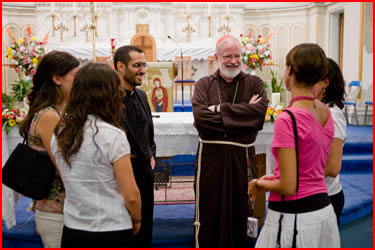
rodriquez_116.jpg

Speaking with Israel and his sisters following the Mass
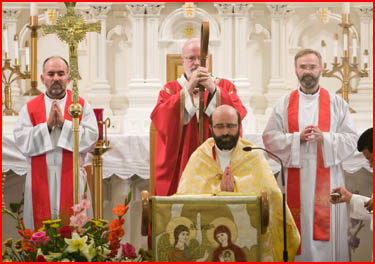
rodriquez_041.jpg

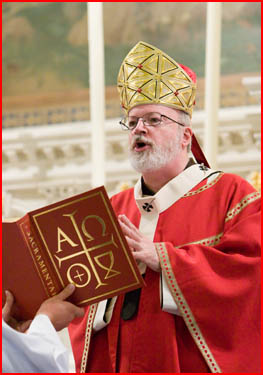
Candidacy is one of the sacramentals that we have before ordination. Formerly, this would have been what we called tonsure. When I was a seminarian, the bishop cut our hair, and that was the beginning of our mission into the clerical state, and for diocesan priests it was their incardination into the diocese. Now, it has been replaced by the ceremony of candidacy, which is a public declaration of the candidate’s commitment to pursue his priestly vocation and prepare himself for ordination in the archdiocese.
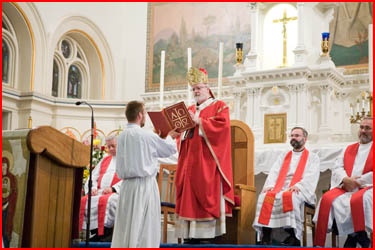
rodriquez_059.jpg

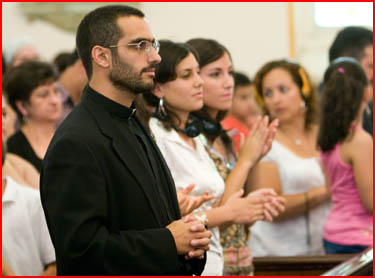
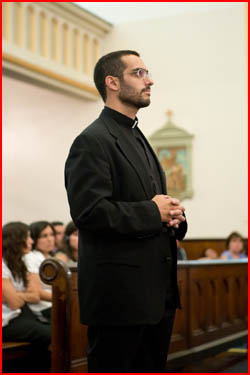
During the rite the candidate, who seated in the front pew, is called forward
to be questioned by the bishop
rodriquez_065.jpg

rodriquez_061.jpg

rodriquez_068.jpg

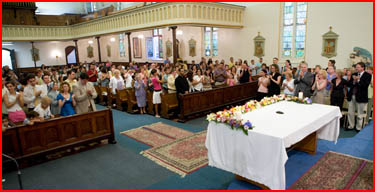
When he returned to his seat, Israel received
a hearty round of applause from the entire assembly
rodriquez_063.jpg

rodriquez_088.jpg

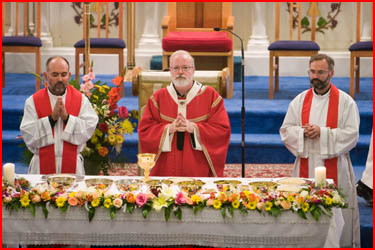
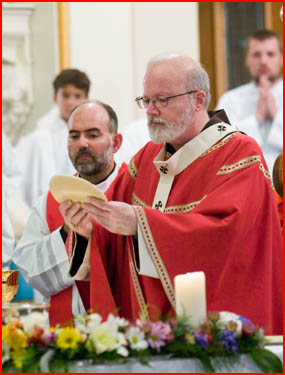
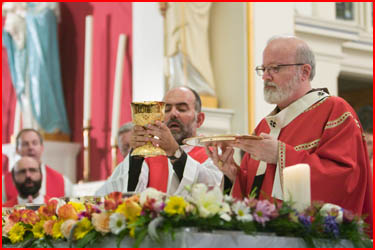
After the rite, the Mass continued with the Liturgy of the Eucharist. On the left is the rector of the Redemptoris Mater House of Formation, Father Tony Medeiros and on the right is Father Jose Manuel de La Peña, the pastor of Our Lady of the Assumption Parish
rodriquez_091.jpg

rodriquez_097.jpg

rodriquez_078.jpg

It was fitting that Israel’s candidacy was on the Feast of St. James the Apostle, and, as I said at the Mass, the beautiful Gospel was almost like St. James’ candidacy ceremony. The reading was taken from when St. James’ mother asked for thrones for her sons at Jesus’ right and left. Then, Jesus puts the question to St. James and his brother, asking, “Can you drink of this chalice of which I am going to drink?” They said, “Yes we can.” That was the beginning, and Jesus said to them, “Yes and you will.” And of course they did!

rodriquez_119.jpg

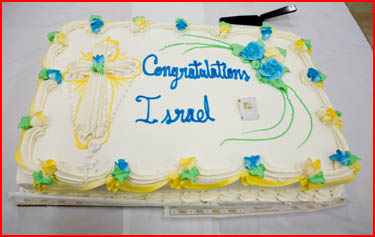
The evening concluded with a reception in the parish hall
rodriquez_117.jpg

The parishioners had this cake made for Israel

- – -

On Thursday, I visited the Department of Youth Services’ Metro Youth Service Center in Dorchester. It was sad to see so many young people in a correctional institution. Most of the children there are between the ages of 12 and 20. Although I worked as a prison chaplain for a few years and have visited many prisons where so much of the population is of young people, this visit was particularly touching.

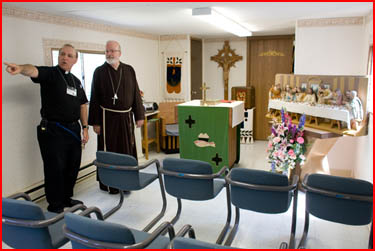
The chaplain, Father Joe Baggetta, has been there for over 20 years and has done a wonderful job. He has a fantastic presence and works so well with the other ministers and with the Knights of Columbus who have provided his ministry with a chapel, which is an air-conditioned trailer.
blog2007-07-29-dys08.jpg

A tour of the chapel with Father Bagetta

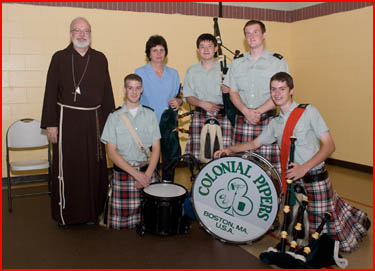
During the visit, we had a prayer service and Father Oscar Pratt, pastor at St. Katherine Drexel Parish in Dorchester, sang with a couple of other ministers. They had beautiful singing voices. There was also a group of young bagpipers who played. They were quite good.
blog2007-07-29-dys07.jpg

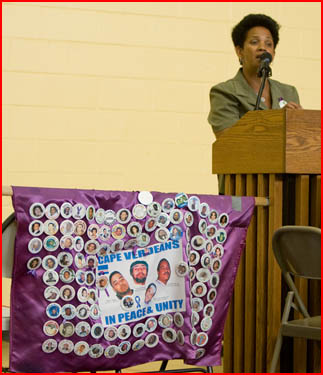
After the music, Isaura Mendes gave a powerful witness talk about her work for peace. Isaura has lost two sons and two nephews to the violence on the streets of Boston. She is a devout Catholic woman from Cape Verde. She came to this country when she was 14 and married when she was 17. Since her sons were killed, she has worked hard to bring about peace and to encourage young people in the Dorchester/Mattapan community where so many have been killed, particularly Cape Verdeans.
blog2007-07-29-dys03.jpg

Isaura Mendes and the banner with the photos of the young victims of violence

As a visual aide, they had a banner there with pictures of the young people who have been killed. It was sad to see how many have died. One is too many, but so many scores of youngsters have perished. Some of them were so young, and many of them were just victims of a drive by. They were just in the wrong place at the wrong time, and had not done anything criminal.
blog2007-07-29-dys05.jpg

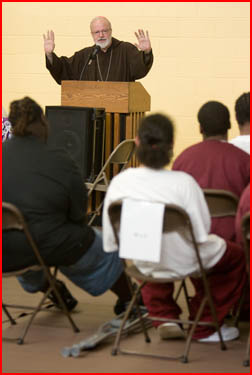
I was able to address the young people myself. I tried to impress on them how much God loves them, and that when we discover God’s love in our lives, it helps us to understand who we are, why we are here and what we need to do with our lives. After the service, we gave out copies of St. Francis’ prayer for peace to all the participants.
blog2007-07-29-dys10.jpg

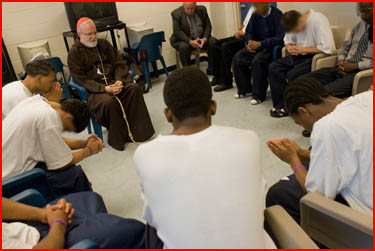
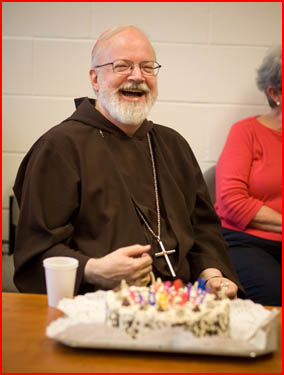
Then, I had a dialogue with about half a dozen of the young men, who were between 14 and 17 years of age. They talked about their experience on the streets of Boston and the violence they have encountered as well as their own hopes to turn their lives around.

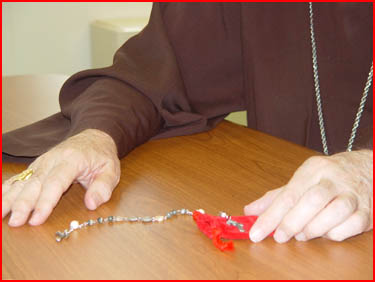
They gave me many birthday presents, even though it is a long time after my birthday, but I did not turn them down! I put one of the gifts in my pocket, a little rosary in a red case. I suppose it is a cardinal’s red rosary case. They also gave me many chocolates and other things, and I was impressed.
blog2007-07-29-dys02.jpg

blog2007-07-29-dys01.jpg

I was also impressed by the staff at the facility. Many staff members have worked there a long time and do so with a sense of mission. I was touched by the fact that the kids gave a great round of applause to the janitor who is retiring. It shows that even the auxiliary staff there is trying to have a positive impact on the lives of these young people.
blog2007-07-29-dys09.jpg

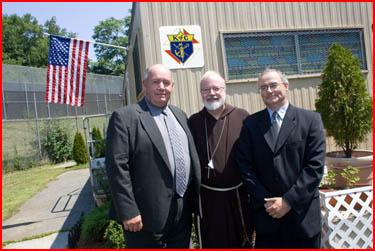
Metro Area Director John Hughes and Deputy Commissioner Ed Dolon
and I outside the trailer donated by the Knights of Columbus

- – -

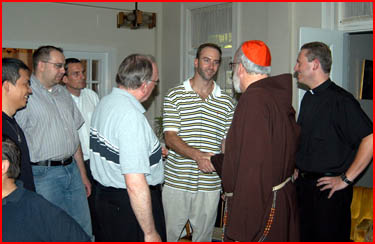
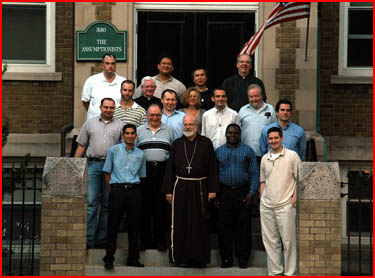
On Thursday evening, I was invited to the Assumptionist House in Brighton. The Assumptionist friars are living in what was the former convent at St. Columbkille Parish. Once there were 46 St. Joseph’s sisters there, and now the friars have moved in. They have some of their seminarians studying at St. John’s with our men. They invited me to be with them for vespers and dinner. It was an opportunity to get to know their community better. We are very grateful for their presence in the archdiocese.
2007_07_26_cardinal_sean_tomasz_jaster-19.jpg

Meeting young lay members of their Christian Residential Program
2007_07_26_cardinal_sean_tomasz_jaster-52.jpg

Posing with the whole group in front of the house

- – -

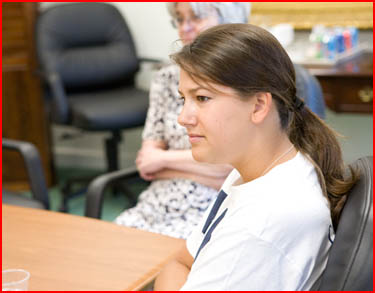
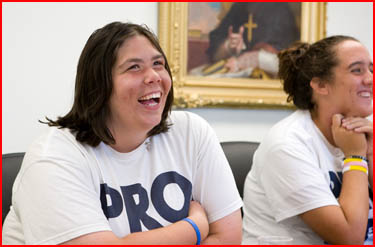
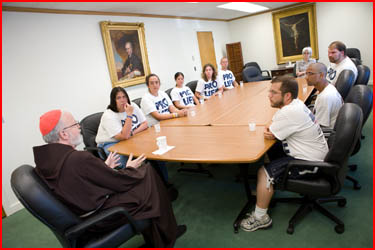
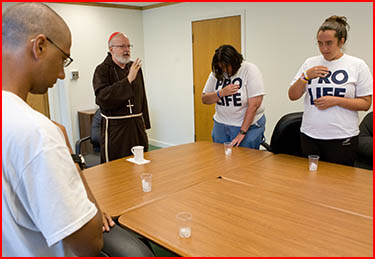
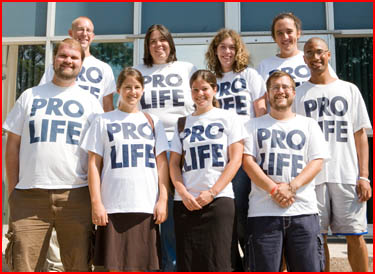
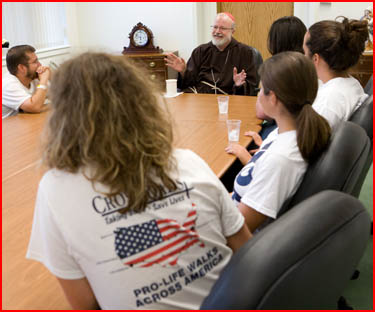
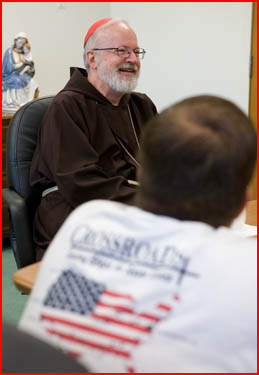
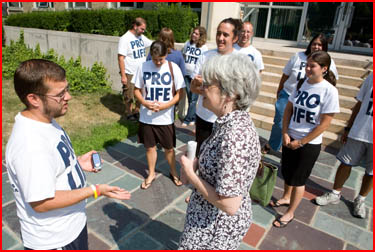
This morning I met with the Crossroads group that is passing through Boston. There are four groups of young Catholics who are walking across the continent to witness to the pro-life movement, three in the United States –they will all converge in Washington for a march on August 11 — and one in Canada. Each year they sort of swing north to be able to visit Boston and to visit some of our parishes. They have been walking for a couple of months, witnessing to the Gospel of Life. They are very faith-filled young men and women who are committed to Church teaching and to the unborn. I was happy to greet them and to encourage them in their journey.
blog2007-07-27-crossroads144.jpg
The group of Crossroads walkers

blog2007-07-27-crossroads135.jpg

We chatted for quite a while about their walk and about pro-life and pro-family issues
here in the archdiocese
blog2007-07-27-crossroads142.jpg

blog2007-07-27-crossroads143.jpg

blog2007-07-27-crossroads140.jpg

blog2007-07-27-crossroads141.jpg

blog2007-07-27-crossroads139.jpg

img_0958.jpg

Before they left I gave them my blessing
blog2007-07-27-crossroads146.jpg

The walkers wanted to attend a Mass after our meeting. Maryann Luthin of our Pro-life Office suggested St. Clement’s Shrine in Boston
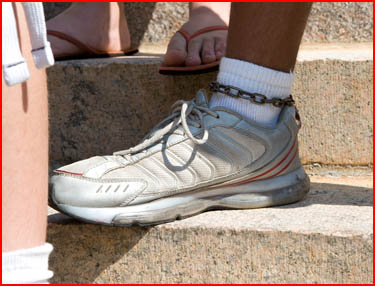
blog2007-07-27-crossroads145.jpg

Several of the young people wore small iron chains such as this one. It is a sign that they have consecrated themselves to Jesus through Mary according to the way of St. Louis de Montfort.
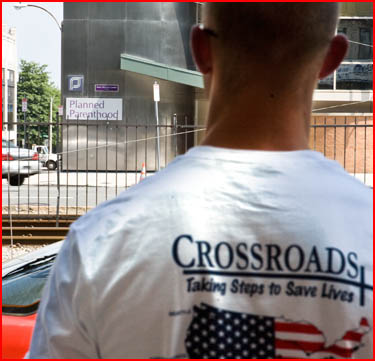
crossroadsimg_1059_2.jpg

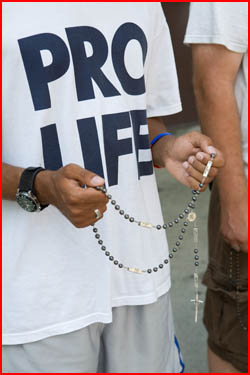
Along the way, they stopped to pray the rosary across the street
from the Planned Parenthood clinic on Commonwealth Avenue
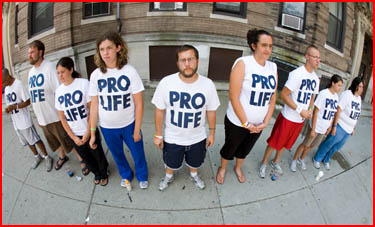
blog2007-07-27-crossroads148.jpg

blog2007-07-27-crossroads149.jpg

blog2007-07-27-crossroads147.jpg

When they finished their prayer, they continued on with their walking to St. Clement’s

- – -

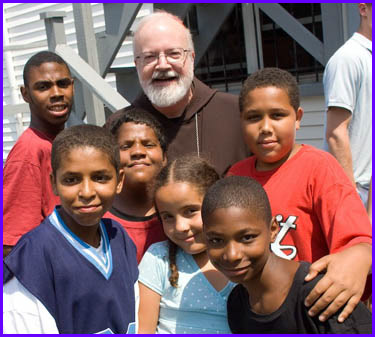
Finally, for my photo of the week I have chosen this photo with the children from my visit to the Sisters of Charity. Their work has many fruits, as the joy of the children they help shows.
sistersofcharity12week.jpg

‘I was in prison and you visited Me’

Welcome and thank you for visiting my blog!
After my return from vacation, I was very pleased to see so many messages on the blog regarding the motu proprio. We couldn’t post all of them but it was interesting to see people’s reactions, and the interest in the motu proprio. I think it only underscores the wisdom of the Holy Father’s approach to people’s liturgical preferences.
I continue to echo the Holy Father’s desire that the liturgy not be the battleground but be a source of unity for all of us. We must love the Mass in all of its different manifestations. Our Latin rite is a very beautiful ancient rite, and we need to grow in appreciation of its history and also in its ongoing history.
Additionally, I am confident that the difficulties concerning the prayers that might be considered offensive to the Jewish community will be resolved. I know that Cardinal Francis Arinze, prefect of the Congregation for Divine Worship, is even contemplating the possibility of trying to harmonize the calendars of the former liturgy with the Norvus Ordo.

- – -

On Tuesday, I met with Bishop Simon Stock Palathara of the Diocese of Jagdalpur in the northern, tribal parts of India.

blog2007-07-20-dscn2135.jpg

Bishop Stock and I in my offices

blog2007-07-20-dscn2139.jpg

Representatives from the Boston Syro-Malabar community and our coordinator for Ethnic Ministries, Sister Mary Corripio, (on the right) join us for a photo

Bishop Stock belongs to the Syro-Malabar rite, which I understand, after the Maronites, is the largest oriental rite in the Catholic Church, and of course, they trace their roots to St. Thomas the Apostle. It is a very ancient rite in the Church and is very strong in Kerala, India where the bishop is from. He has relatives in our diocese who are very active with the Syro-Malabar Catholics here. Last year I celebrated the Mass for the feast of St. Thomas, their special patron, and this year Bishop Walter Edyvean celebrated the Mass held at St. Jude Church in Waltham.
I would like to share some of the scenes of the celebration with you.

blog2007-07-20-img_3194.jpg

Children dressed in traditional Malabar dress, with flowers and a lamp in their hands, wait to receive the bishop

blog2007-07-20-img_3176.jpg

Bishop Edyvean being solemnly received with “Thalappoli” (virgins dressed in traditional Malabar style clothing, carrying flowers and a burning lamp) and “Muttukkuda” (decorative umbrellas used in religious processions, unique to the Syro-Malabar Church)

blog2007-07-20-img_3179.jpg

blog2007-07-20-img_3226.jpg

Bishop Edyvean delivers his homily

blog2007-07-20-img_3238.jpg

Offertory procession of flowers, fruits, candles, Bible, bread and wine

blog2007-07-20-img_3262.jpg

blog2007-07-20-img_3200.jpg

Bishop Edyvean presiding at Mass. The celebrants were Fathers Kuriakose Vadana, Baiju Avittappallil, Joshy Paramthottu, Frank Silva, Cyriac Mattathilanickal, Tom Vallamattam, William Kaliyadan and John Karuvelil

blog2007-07-20-img_3343.jpg

The choir with Bishop Edyvean

blog2007-07-20-img_3345.jpg

Religious sisters belonging to the Syro-Malabar rite working in the Boston area. The majority of the Missionaries of Charity Sisters come from the Syro-Malabar Rite Catholics

blog2007-07-20-img_3397.jpg

Soumya Johnson presents a classical Indian dance

blog2007-07-20-img_3409.jpg

Little Flower Mission League children perform dances

blog2007-07-20-img_3449.jpg

Trophy for perfect attendance at religious education classes is presented to Blessy Varghese

blog2007-07-20-img_3418.jpg

Jesus Youth present an Indian folk dance

The bishop did say that often times there is persecution of the Church, even in the tribal areas where more and more people are coming to Christianity. Their coming is provoking a reaction from the nationalists and the Hindus who resent that. But the Church in India has grown strong, and many of the religious communities and diocese in India that are blessed with many vocations are participating in the mission ad gentes. In my own community, we have help from India with our mission in Papua, New Guinea. They are also helping in Zimbabwe and in other parts of Africa. Many people think of India as a mission country, but actually it is a country that now has many vocations and is supporting many missions.

- – -

On Wednesday I visited Old Colony Correctional Center and Bridgewater State Hospital where there are actually four facilities that make up one compound.

blog2007-07-20-07182007oldcolony06.jpg

Capt. Paul Gordon, director of classifications Carol Lawton, Dep. Superintendent Mark Powers, Deacon Monroe, Superintendent Steven O’Brien and Lt. Doug Bower of Old Colony Correctional Facility join me for a photo

We had a prayer service at one of the facilities, organized by chaplain Deacon Richard Monroe. They had a fantastic choir and a group of musicians who played at the bilingual service. The singing was extraordinary.

blog2007-07-20-07182007oldcolony03s.jpg

blog2007-07-20-07182007oldcolony01s.jpg

blog2007-07-20-07182007oldcolony02s.jpg

I visited the cell blocks there as well. In particular, I tried to visit those who are in solitary confinement.

blog2007-07-20-07182007oldcolony06s.jpg

From there I went to Bridgewater State Hospital and met with the staff and a number of the patients there. I was very moved by the situation in the hospital where some very sick people with mental problems live. Obviously, their mental problems have brought them into conflicts with the law. We had Mass in the auditorium for the patients and there must have been 150-200 people there. Peg Newman, the hospital’s chaplain, organized the Mass and did a wonderful job.
Superintendent Karin Bergeron was very impressive and compassionate. We also met Judge Minehan who works there. One of her assignments from the courts is to determine when people are liable for judgment or whether their mental capacity is such that they cannot be held fully responsible.
In the past, I found myself critical of how difficult it is for us in the United States to commit mentally ill people to institutions where they will get proper care. I was in Washington, D.C. when the Supreme Court ruled that no one could be held against their will unless they were deemed dangerous. That was, in some ways, the beginning of much of the homelessness in the United States. However, after speaking with Judge Minehan, I was very moved to hear her talk about the great lengths that we go to in this country to defend people’s civil rights and dignity and avoid doing what happens elsewhere. In some countries, people who are political dissidents or are considered nuisances are simply medicated and warehoused in some sort of institution. In our country, on the other hand, a real effort is made to determine someone’s mental health before the state intervenes.

blog2007-07-20-07182007oldcolony04s.jpg

Now, that does not gainsay our lack of preparedness to deal with the people whose mental health problems have put them on the street. That is another problem, but I was certainly impressed by the great respect that the judge has for the people that she serves there. She also talked about John Hinckley, Jr. who was involved in the assassination attempt against President Ronald Regan. She said that the testimony of his parents indicated how, from his childhood, he had mental problems that isolated him from the community. It was so obvious that he was very mentally ill and yet the reaction to the case was for legislatures to change the laws to make it all the more difficult for someone to plead insanity, she said.
Another man who worked at the hospital also talked about a girl who had been stalking some famous television personality and the papers treated it with such levity, calling her a “crazy.” The man said that in interviews, the parents talked about how this young woman had been the valedictorian of her high school and had been such an outstanding student and daughter. They also talked about how she later became schizophrenic, began stalking this man and eventually ended up taking her own life.
There is such tragedy behind these stories, and I was moved to see a whole hospital full of people whose lives have been so damaged. I know the suffering that it causes not only them, but their families and the communities that they come from.
I worked as a prison chaplain for two years when I was a young friar, and it has always been a ministry that I have found to be a great grace. Jesus said, “I was in prison and you visited Me,” and we know that when we go to prison, we do find Christ there. I am very grateful to Deacon Bill Kane, director of the Office for Prison Ministry, and all of those in the archdiocese who are involved in this ministry. We have many religious, deacons, priests and lay people, particularly Cursillistas, who are giving retreats in the prisons and doing wonderful ministry there, helping people to find their way back to God.

- – -

On Thursday I had the pleasure of having lunch with my Capuchin brother, Father Simeon Gallagher.
He travels all over the country to preach and give parish missions and he has given many here in the archdiocese.
He happened to be here this week, so it was wonderful to have a chance to spend some time and speak with him. We were in the seminary together.

- – -

On Thursday evening, I traveled to Marshfield to a home which Msgr. Cornelius McRae and three other priests purchased together many years ago.
Every year Msgr. McRae invites Archbishop Hughes of New Orleans (who is, as most know, originally from Boston) to the house for week or so of vacation.
This was the week of the archbishop’s annual visit, so they asked me to join them for dinner.

blog2007-07-20-img_0015_1.jpg

Archbishop Hughes (on the left) Msgr. McRae and I relaxing in Marshfield

During the evening, we had a chance to hear from Archbishop Hughes about the rebuilding effort in his archdiocese in the wake of Hurricane Katrina.
The archbishop noted that the early French Catholic settlers of the area were very wise and built on high ground. For this reason the cathedral, along with many other historic structures in the city escaped with relatively little damage. We are grateful for that.

blog2007-07-20-cathedral.jpg

The cathedral of New Orleans

It was also very edifying to hear the stories of the many ways the people, priests and staff of the archdiocese worked to meet the needs of the people of New Orleans in the hurricane’s aftermath: how they worked to find food, clothing and shelter for all those affected by the storm.

blog2007-07-20-hughes2.jpg

Archbishop Hughes in a helicopter September 2005, surveying the flood damage after Hurricane Katrina

blog2007-07-20-help2.jpg

Bishop Hughes made a great effort to understand, first-hand, the needs of his people following the flooding

blog2007-07-20-hughes1.jpg

Archbishop Hughes worked not only to meet the physical needs of his people but their spiritual needs as well. Of course, following the hurricane the vast majority of the population fled the area. I was very pleased to learn that wherever there was a large concentration of refugees from New Orleans, the archbishop sent a priest to minister to them.

blog2007-07-20-katrina2.jpg

Archbishop Hughes giving a blessing to a New Orleans evacuee at a Red Cross shelter in Baton Rouge

The work of the archbishop and those of the Archdiocese of New Orleans was — and continues to be — truly heroic.

- – -

For my photo of the week I have chosen this photo of a carving given to me by Bishop Stock and is a typical handicraft of the tribal region in India. It was a wonderful gift and I am pleased to have had the opportunity to meet the bishop.

blog2007-07-20-statue.jpg

Until next week, a blessed and restful summer week to you all!
- Cardinal Seán