Cardinal Seán's Blog

Cardinal Seán shares his reflections & experiences.

Archive for 2008/02


Happy leap day

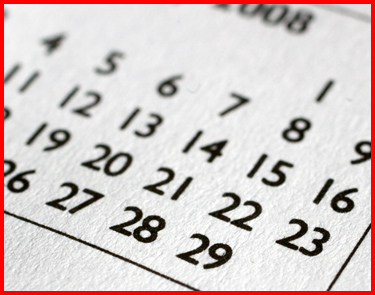
As most of you know, I post my blog every Friday. This particular Friday happens to fall on February 29 — the extra “leap day” we get in most years divisible by four. (I understand that February 29 won’t fall on a Friday again until 2036, so I’d better take the opportunity to talk about it now!)
leapyear_img_9596_1.jpg

Yesterday, while browsing through news online, I came across an article in a Connecticut newspaper, the Weston Forum, that explains the origin of the leap year. The article, entitled “Who put an extra day on the calendar?” was written by Kimberly Donnelly. I thought it very nicely explained the origins of the leap year and that a pope — Pope Gregory XIII — promulgated the calendar that we still use today.

Here’s a bit of her article. You can read the rest online if you’d like:

A year is a leap year if it is divisible by four (that’s easy). But, if the year is also divisible by 100, then it is not a leap year (there’s that century rumor), unless it is also divisible by 400. Ahh. So that’s why eight years ago the year 2000 was a leap year. In fact, it was the first century leap year since 1600.

Who makes this stuff up?

Julius Caesar and Pope Gregory, that’s who.

Someone had to do something in order to keep the seasons from drifting into different months. The exact length of a year — that is, how long it actually takes the earth to revolve around the sun — is 365.24219 days. That means if the calendar year were just 365 days, the seasons, which are determined by the position of the earth as it orbits the sun, would shift a quarter of a day every year. Not such a big deal, until 100 years go by and autumn is beginning in mid-August, 25 days earlier than it used to.

So, in 45 BC, Caesar decided to add a day at the end of February (back then, it was the last day of the year) every four years.

julius_cesar.jpg

Julius Cesar

This was an improvement, because now the average calendar year was 365.25 days, which was closer to the actual year, but it still didn’t fix the problem. At 365.25 days, now the calendar year was too long, and the seasons would eventually drift the other way, falling one day later every 128 years.
gregory_xiii.jpg

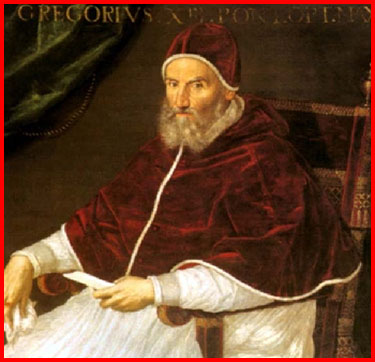
Pope Gregory

In 1582, Pope Gregory was apparently bothered enough by the shifting seasons that he decided to do something about it. In one fell swoop, he changed the end of the calendar year to Dec. 31, he left 10 days out of October, and he added the “no leap year on a year divisible by 100 unless it’s also divisible by 400” part of the rule.

- – -

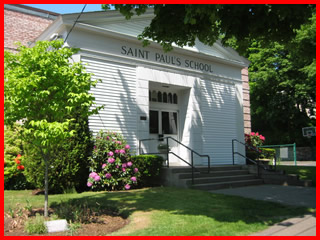
I was so pleased to receive a number of comments last week from students of St. Paul School in Hingham. Our Catholic schools are a very important priority in the life of the Church. We are anxious for our students in Catholic Schools to learn about the Church, and certainly the blog gives them an opportunity to not only get to know their bishop a little bit better but also to see what is happening in the Catholic community throughout the archdiocese and in the universal Church.
stpaulschoolfront.jpg

I was very pleased that they read the post and that they took the time to write. I hope they will continue to be blog readers and communicate with me through the blog.

I look forward to visit the school some day. Like so many of our Catholic schools, St. Paul was started under the auspices of the nuns, the sisters of St. Joseph, in 1951 and after was staffed by the Sisters of Notre Dame de Namour for many years. The current principal at the school, Brother Richard Lunny, CFX, used to work with us in Fall River so I’ve known him for a long time.

- – -

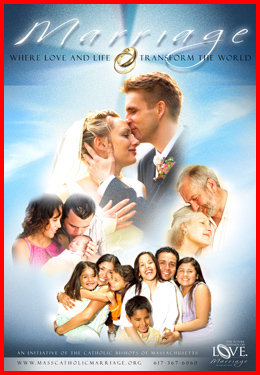
I wanted to share with you news about the Massachusetts Marriage Initiative, which is sponsored by the Massachusetts Catholic Conference. Their new website is already up and we want to share that with everyone in our archdiocese and beyond. I encourage you to visit and to learn more about the initiative.

The theme of the initiative is “The Future Depends on Love,” and strives to educate Catholics concerning the truth of marriage as well as empower them to make a case for it to the wider community.
mcc-final-poster.jpg

One of the crucial tasks of the Catholic Church is to help people have a sense of vocation in their lives: the vocation to holiness, to friendship to discipleship and to a particular calling in life. We realize that God is calling most people to the sacrament of marriage. Therefore, this initiate will also help our young people to have a greater understanding of the sacrament and to prepare them better to receive it in a world where fewer people seem to be getting married.

The Church in the United States has also embarked on various programs of education and catechesis around the theme of marriage. Currently, the bishops conference is focused on a marriage initiative for the entire the country called “For Your Marriage,” and the bishops conference will be publishing a pastoral letter on marriage in the near future.

At the archdiocesan level, Kari Colella is working with a committee of people to improve our marriage preparation programs and to look at ways to offer our young people remote preparation so they have a greater understanding of this vocation of marriage.

mcc-jpg-2.jpg

So, in fact, we have three different marriage initiatives taking place simultaneously although they are working with each other. That shows, in some way, how important we think marriage is for society and the Church.

- – -

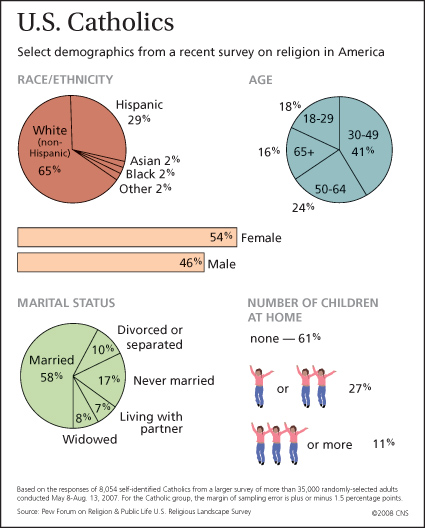
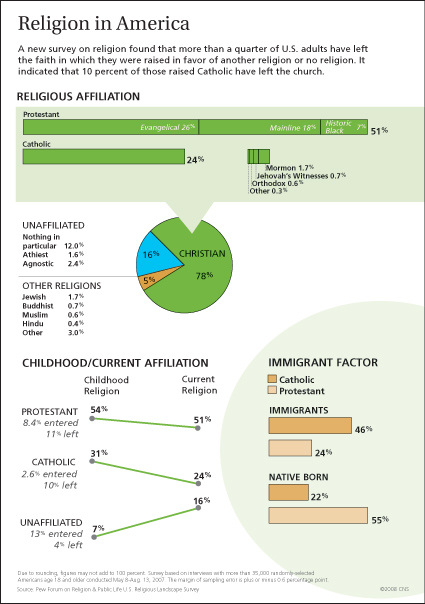
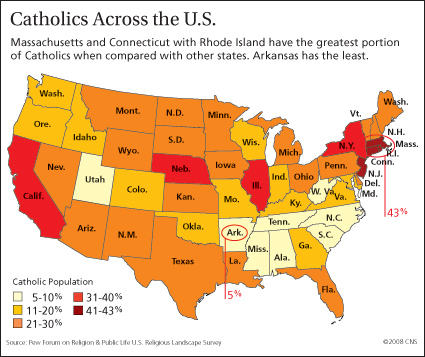
The Pew Forum on Religion and Public Life, released Feb. 25 its survey based on interviews with 35,000 adults last year. The “U.S. Religious Landscape Survey” showed that more than a quarter of Americans have either changed religious affiliations or claim no formal religion at all. The Catholic Church in our country has been greatly affected by this, but immigrating Catholics have kept Catholics as a quarter of the American population. Certainly the study is very significant and indicates the need for a renewed effort at the new evangelization. We must mentor our own Catholics in the faith.
08gx028c.jpg

Emily Thompson at the Catholic News Service produced these graphics which help illustrate the findings of the study

I think a great part of the problem is the difficulty of catechizing and mentoring young Catholics into the life of faith. In the past, we depended very much on cultural bonds. If someone was born into an Irish, Italian or Polish family, they were raised Catholic and identified completely with that heritage. Today, we see that people’s participation is much more intentional, which also has its advantages. The people are choosing to live their faith because of their own personal convictions and desire to live a life of discipleship, rather than just being carried along by folk religion and family customs.

This change only underscores the great importance of faith-formation and it is one of the things that the archdiocese is certainly grappling with. We have been studying the faith formation of adolescents and young adults and have formed a new office — the Office for the New Evangelization of Youth and Young Adults — in order to strengthen our efforts and help the parishes.

We must respond to the challenge of communicating to our young people a sense of personal vocation, a call to holiness and a call to a personal way of life — marriage, the priesthood, consecrated life, the diaconate and lay ministry. At the same time, we must also help Catholics understand that we have received a communal mission from Jesus Christ — to be a part of His Church and to announce the Gospel together, gathered around the Eucharist.

In today’s highly individualistic culture, people are deluding themselves into believing that the way that you live your spiritual life is highly personal and isolated from the community of faith, but Jesus came to establish a people, a Church that is His Body. Therefore, we must communicate the faith but also mentor people in the faith. It is not enough to simply pass on information; we must help people to recognize in Jesus’ Gospel is a way of life. It is a way of life that is according to God’s will and one that, if we are faithful, will lead us to eternal life and happiness with God forever.
08gx027c.jpg

Our mission is urgent and calls upon us to work to transform this world to be a more just and merciful society where the poor and defenseless are cared for and fed. And where our human community, living according to God’s plan, reflects the values of the Kingdom that Jesus announced in the Gospel.

The study is very clear about the importance of the Catholic immigrant population here in the United States. About half of all immigrants to this country are Catholic. This has maintained Catholic participation to about a fourth of the American population, which is still a very considerable number, but does underscore a great need to be a welcoming community. We need to realize that we are an immigrant Church — today just as much as ever, and at the same time, look for new ways to evangelize our American Catholics whose religiosity is becoming less tied with their culture and more an intentional choice to be a part of the Church.

The release of this study coincides with our bicentennial year. About 200 years ago there were probably 1,000 Catholics in Massachusetts and 2-3 priests. And in 200 years the Church has grown considerably because of immigration, because of the way people have responded to the Church’s message.

Every generation has faced its challenges and opposition. Today, we continue to face new kinds of opposition in secularism and atheism. But people should not be frightened by that. Christ promised us that He would always be with us. His Church continues to grow in the world — there are now over one billion Catholics. Our challenges in the United States are great amidst a society that is very materialistic and tending towards greater secularism, that is trying to tell us to live our lives prescinding from God. The Church’s message is challenged in these circumstances, but we carry on knowing that the Lord’s grace is with us and that we have a mission to fulfill.
08gx029c.jpg

I am edified by the commitment and love that so many of our faithful people have for the Church, which we must all witness to more openly. That will also be a call for Catholics who have stepped away from the practice of the faith to feel a new excitement about their faith and to feel welcomed to reconnect with their Church.

- – -

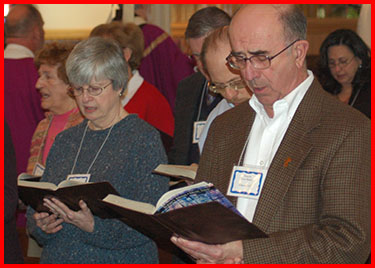
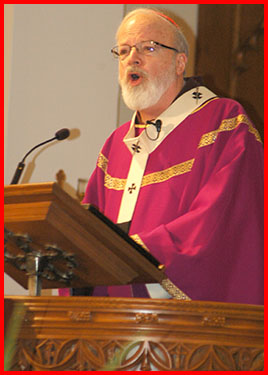
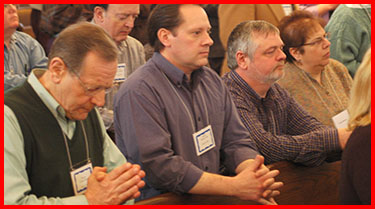
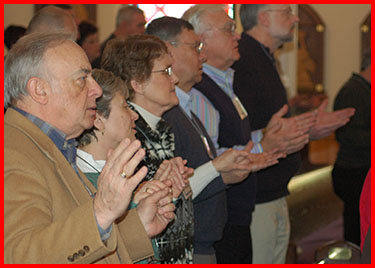
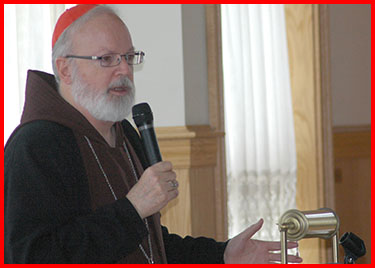
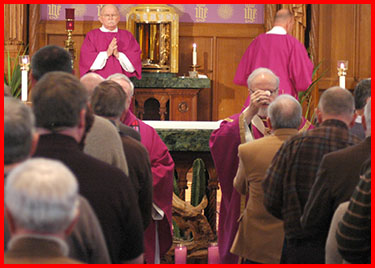
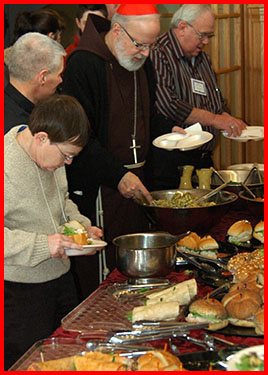
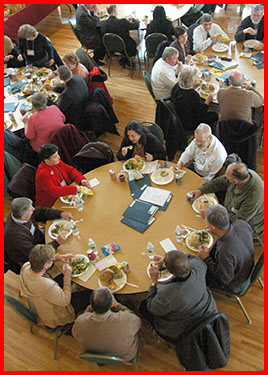
On Saturday, I attended our annual permanent diaconate convocation with the deacons and their wives at St. Patrick Parish in Stoneham. The parish is such a beautiful church and facility for this sort of gathering.

I celebrated Mass with them, had lunch and delivered a talk. We had a conversation, dialogue back and forth.
deacons7.jpg

deacons11.jpg

deacons10.jpg

deacons15.jpg

deacons12.jpg

deacons13.jpg

deacons6.jpg

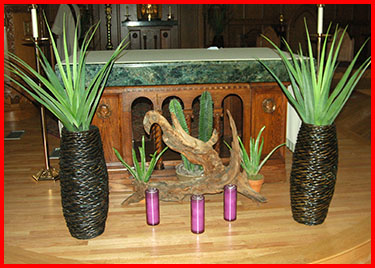
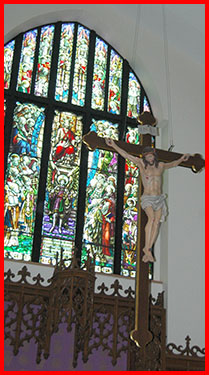
The palms and cactus decorations before the altar illustrate the Lenten theme of Israel in the desert
deacons4.jpg

deacons2.jpg

deacons24.jpg

deacons25.jpg

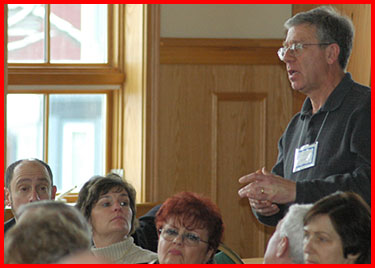
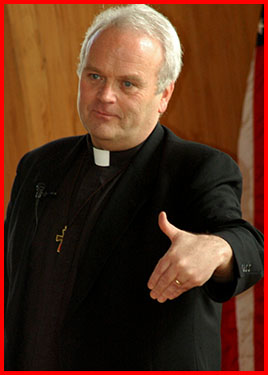
It was an opportunity for the deacons to ask questions. The keynote speaker for the convocation, Deacon Keith Fournier, is a lawyer and completing his doctorate in moral theology at Catholic University. I was very impressed by him.
deacons16.jpg

deacons5.jpg

We are very pleased that Deacon Patrick Guerrini is now in the Office for Clergy Support and Ongoing Formation, working on the ongoing formation of the deacons as well as the personnel department for their assignments. It has been a big help having him on board.

The ongoing formation of our priests and deacons is critically important. Both Father Bill Kelly, the office’s director, and Deacon Guerrini are working with the deacons in this regard. As I mentioned in a post earlier this month, we are poised to begin having deacon classes every year to increase the numbers of men involved in this ministry which, going forward, is going to take on even greater importance.

Until my next post.

In Christ.

Cardinal Seán

Meeting with the women religious superiors

Recently Bishop Daniel Anthony Hart, the bishop emeritus of Norwich, Conn., passed away after a long illness. He had been a priest of the Archdiocese of Boston and for many years an auxiliary bishop in our South Region prior to being named a bishop in Norwich.

hartbishopdaniel.jpg

Bishop Hart

He was very beloved, and Bishop Francis Irwin organized a memorial Mass in Boston.

The Mass was held at St. John the Baptist Parish in Peabody, which is one of the parishes where Bishop Hart served as a parochial vicar for many years. He also served at a number of other parishes in the archdiocese.

blog08-02-22-bphart-picture-041.jpg

Members of Knights of Columbus Leo Council 508 and Bishop Irwin

Many of the parishioners at St. John’s had been parishioners when Bishop Hart served there. Father John MacInnis, the current pastor, hosted the Mass and a reception after, where many of the parishioners shared wonderful stories. They recalled memories of the ministry of this very zealous and kind priest.

Members of Bishop Hart’s family were also there. One of his brothers looked so much like Bishop Hart and sounded exactly like him. Another brother who is a doctor, a sister, some cousins and little grandnephews were present as well. They all seemed very happy that there was a memorial Mass in the Archdiocese of Boston.

blog08-02-22-bphart-picture-038.jpg

Bishop Irwin and Bishop Hart’s family

Then, after the reception, I visited the prayer group that was having a very nice Stations of the Cross in Spanish.

- – -

On Sunday, I celebrated Mass for the second Sunday of Lent at Marian Manor, a nursing home run by the Carmelite Sisters for the Aged and Infirm, in South Boston.

marianmanor_img_9359.jpg

Stained glass windows of the sisters’ chapel

marianmanor_img_0078_2.jpg

The Carmelite sisters there do such a wonderful job and I was pleased to see that they have a young novice working with them.

marianmanor_img_0074.jpg

I have been very blessed because Carmelite sisters have been in three of the four dioceses I have served as bishop. So I knew them well in Fall River as well as Palm Beach, Fla. They have a very special ministry, the care for the elderly and infirm. The sisters also run St. Patrick Manor in Framingham, and we are blessed to have their charism as part of our archdiocese.

marianmanor_img_0118.jpg

It was nice that a number of people come and accompany their parents to Sunday Mass there at Marian Manor. Some of our priests were also able to attend this Mass.

Father Vincent Von Euw is now residing there. He concelebrated from his wheelchair and is doing much better.

marianmanor_img_0061.jpg

Father Von Euw

Also Father Joseph Rothwell concelebrated.

marianmanor_img_0068.jpg

Father Bill Cuddy was also with us. He is a Boston priest, a captain in the Navy and the head chaplain for the United States Coast Guard, which is a very prestigious post. When he is home, he lives with us at the cathedral. So when he heard we were going to Marian Manor, he asked to join us.

cuddy_william.jpg

Father Cuddy

We also met a woman named Bridget Conroy who is going to be 106 in November! One of her children is a priest and three of her daughters are religious sisters.

marianmanor_img_0081.jpg

Bridget with staff members Kathleen Lloyd and Sister Margaret Therese. Doesn’t she look remarkable for 105?

Bridget is from Ireland, and her mother was an O’Malley. She is in a wheelchair but is very active and keeps busy. She reads extensively, knits and crochets every day.

- – -

On Wednesday, I met with the women religious superiors in the archdiocese. The gathering was hosted by the Missionary Franciscan Sisters of the Immaculate Conception at Mount Alvernia High School in Newton.

womenreligious_img_0003.jpg

womenreligious_img_9203.jpg

The superior of the Franciscan sisters, Sister Marion Morrissey welcomed us to the gathering

We had a prayer service, and then I talked with them about the latest things that are happening.

womenreligious_img_9287.jpg

I talked about the “Arise: Together in Christ” program, organized by Renew International. I also gave them an update on the committees that have been set up, our move to Braintree and the vocation situation.

womenreligious_img_9275.jpg

Then, we had questions and answers with the sisters and afterwards Sister Marian Batho, the Boston delegate for religious, invited the representatives from the various communities to talk about their spirituality. We have 87 congregations of women religious in the archdiocese, with over 2400 women.

womenreligious_img_9268.jpg

Sister Marian

womenreligious_img_9258.jpg

It was an opportunity for them to get to know each other better and share their spirituality.

womenreligious_img_9942.jpg

womenreligious_img_9933.jpg

womenreligious_img_9242_1.jpg

womenreligious_img_9236.jpg

The Little Sisters of the Poor, the Sisters of Notre Dame de Namur, the Sisters of St. Joseph and many of the other communities have been here for decades. One of the Sisters of Jesus Crucified, which is a tiny Lithuanian community, spoke up and joked with the other women, “We are very proud to be one of the two communities that have their generalate in the Archdiocese of Boston, my community and the Sisters of St. Joseph. We just want to welcome all the rest of you visitors.” She got quite a rise from everyone!

One of the Marist Missionary Sisters, a congregation I know so well because they were with me in the West Indies, recalled a humorous comment made by their development director. She explained that the Marists’ charism is to live like Mary, a life of hiddenness and simplicity. The development director said, “This hiddenness business is killing us.”

womenreligious_img_9946.jpg

womenreligious_img_9300.jpg

There was a great spirit among the sisters and many of them talked about the large number of retired sisters that they are caring for. A lot of their energy goes into that. The sisters of St. Chretienne spoke about that in a dramatic way and many other sisters mentioned that. These retired sisters are the ones who have contributed so much to the life of the Church in our country and in our diocese. Sister Marian quoted what I said in my homily marking the beginning of our bicentennial year about the religious in the archdiocese and the contributions they made:

womenreligious_img_9255.jpg

As we look back, our hearts must be filled with gratitude and admiration for the priests, the religious, the laity that have gone before us, marked with a sign of faith. The parishes, the nursing homes, the schools, the hospitals, the agencies, the social services, the organizations. The many who collaborated with the Church’s mission and the universal Church as priests in the military service. Over 300 who have served in the St. James Society. Those from Boston, who founded Maryknoll. The countless religious, including our own Sisters of St. Joseph, the Notre Dame sisters who staffed so many countless schools. The five convents of contemplative sisters here, praying for the needs of the Church. Our two seminaries, and the countless faithful Catholic laity, who have made so many sacrifices for their Church. And so courageously and quietly witnessed to their Catholic faith and family life. For the priests and deacons and catechists in our parishes, our unsung heroes. Today, for all of these blessings of 200 years, we say, “Thank you, Lord.”

- – -

This year St. Patrick’s Day falls during Holy Week, and we are not allowed to have the liturgical celebration of St. Patrick during that week. An option would have been to move the feast; however, the official calendar of the Church has already moved St. Joseph’s Day to Saturday, and I was loath to move St. Patrick’s Day to a Friday in Lent.

stpats06_img_2964.jpg

So, what we are going to do in the archdiocese is have a Mass on Monday, March 17, the civil holiday. We will celebrate the liturgical Mass, with its readings and prayers, of the Monday of Holy Week, but at the Mass we will reflect on the life and ministry of St. Patrick. As usual, we will bless and distribute the shamrocks, which St. Patrick used so effectively — as a symbol of the cross and as a symbol for the Trinity.

stpats06_img_2728.jpg

In Massachusetts, where we have the largest percentage of Irish-Americans of any state in the country, St. Patrick’s Day is always a very important celebration — both religiously and civically. As a matter of fact, we are probably the only place in the United States where St. Patrick’s Day is a civil holiday. Of course, this is done by a certain subterfuge. They call it Evacuation Day, but they were looking for an excuse to have St. Patrick’s Day as a civil holiday.

Just like every year, we hope to have a nice group of priests and laity joining with us as we honor St. Patrick. We expect people to come to the cathedral wearing green in honor of the patron saint of the archdiocese. And I always remind people that they should celebrate his feast day whether they are Irish or not. After all, St. Patrick was not Irish.

We want to remember St. Patrick as a great missionary. Unfortunately, for the secular world the celebration and the drinking are what people associate with the feast, but we who are believers and are Catholics, need to be reminded of the missionary nature of the Church.

Boston has contributed much to the Mission Ad Gentes, and not just through the 300 priests who have gone to South America with the Missionary Society of St. James. There have been a countless number of men and women religious who have served all over the world, and right now many are still serving all over the world. Even the founders of Maryknoll came out of Boston. We have in our midst a retired Maryknoll bishop from Korea, Bishop William McNaughton. His presence in the archdiocese is just another reminder of this great connection.

Additionally, at one of our recent Presbyteral Council meetings our new head of the Propagation of the Faith, Father Thomas Kopp, announced that Boston is one of the dioceses that give the most to the propagation in the world. He said that we give more than the entire country of England. So I said to him as an Irishman who lives in Boston, “I hope you were not surprised by that.” Also, the archdiocese is one of the largest contributors to the Latin American collection the U.S. Bishops organize every year.

I know that Father Kopp is anxious to promote the materials from the Holy Childhood Association for elementary school children. When I was growing up, we would get little mite boxes during Lent to “buy pagan babies with.” We laugh about it now, but the money was used to save orphans. Now the Holy Childhood’s efforts are much more sophisticated and put children in touch with children in the third world. This helps our children to be aware of the situation, the needs and the gifts of those children in mission countries. Just as that was part of my generation’s mission formation, I would like to see the Holy Childhood be more of a force in the religious formation of our Catholic children today.

The emphasis that Cardinal Richard Cushing gave to the Mission Ad Gentes and the mission appeals that are done, by many of our St. James Society men and others has kept people’s mission conscience very much alive.

Sometimes we can become parochial in our pew, but our mission is part of the universal Church, and St. Patrick was the great missionary. We joyfully and gratefully honor his memory and invoke his blessing and intercession for the Archdiocese of Boston as we celebrate our 200th anniversary here as a local church.

- – -

A couple of weeks ago I met with a group of our seminarians from St. John’s who went to Peru over the Christmas break to visit the priests of the Missionary Society of St. James. In their trip they were accompanied by two of the seminary priests — Fathers Chris O’Connor and Joe Scorzello.

They were having dinner at a Peruvian restaurant, Don Ricardo, which is right near the cathedral. When I finished my other obligations that day, I joined them for dessert and coffee. I was able to hear some of their experiences. They were very enthused about their time there, and I have invited them to share their story with you as well as some of the wonderful pictures that they have. And so, two of the seminarians, Eric Bennett and David Bearse — who is a seminarian from the diocese of Springfield studying at St. John’s — have prepared the following text:

An eleven day trip to Peru with six other seminarians and two of our priest faculty members during this past Christmas break was a great opportunity for us to gain appreciation for the work of the Missionary Society of St. James. It was made possible in large part through generous donations from many priests and parishes. The trip took place a few weeks before the silver anniversary of the Society of St. James. The Society of St. James was begun by Cardinal Cushing. It provided the opportunity for diocesan priests to spend time working in the missions, in order to share the Gospel message as well as to bring the fruits of their experiences back to work with immigrant populations in their home dioceses.

This trip was a great blessing for the group from St. John’s Seminary since it provided them with an opportunity to experience the Church living and growing in a developing part of the world, as well as to experience the many dimensions of the work of the Society of St. James. Between our visits to parishes in Lima and Cuzco, we visited Machu Picchu as well as several pilgrimage sites in Lima.

blog08-02-22-peru-4.jpg

On our way to Machu Picchu

blog08-02-22-peru-8b.jpg

blog08-02-22-peru-6.jpg

David Napoli at Machu Picchu

We arrived in Lima on Dec. 27, 2007, and spent some days at the center house of the society. The center house is the central base of operations in Peru for the society, it also provided a place for the priests to gather when they come in from their parishes both for some time of fraternity as well as some rest.

From Lima we took a flight to Cuzco. Arriving in Cuzco we needed to spend some time simply relaxing as the drastic change in altitude affects most people because of the lower oxygen level.

blog08-02-22-peru-14a.jpg

Chris Carmody and the Peruvian countryside

It forces you to move more slowly, and often causes headaches and other pains. On Dec. 30, 2007 sufficiently rested and having explored Cuzco a little, we left Cuzco at approximately 5 in the morning to head far into the mountains to visit a town named Santo Tomas.

blog08-02-22-peru-14.jpg

We made the trip in this van

This journey should have taken about 9 hours, but ended up lasting 14 hours with some diversions. The road the group was traveling on was not paved and straight like the Mass Pike. Rather it was a bumpy, narrow one-lane dirt road that criss-crossed the Andes. It was a very scenic ride, and along the way we were treated to the sight of many llamas, and the opportunity to cross a traditional Inca rope bridge by foot, but the group was very happy when we finally did arrive in Santo Tomas.

blog08-02-22-peru-4b.jpg

It was certainly a very scenic ride

blog08-02-22-peru-15.jpg

The parish of Santo Tomas has been shepherded by a Revere native, Father Jerry Pashby for the past 15 years.

blog08-02-22-peru-17.jpg

Santo Tomas

blog08-02-22-peru-24.jpg

That’s Father Jerry Pashby on the left

His parish covers a territory as large as all of Eastern Massachusetts minus the Cape and the Islands. His main base of operations centers on a large church, but he is also responsible for the care of many villages, some of which are only accessible by his motorbike, and others only by foot.

blog08-02-22-peru-21a.jpg

Besides the care of souls, Father Pashby has undertaken many projects which have benefited the people of Santo Tomas. He worked for the chlorination of drinking water to make it safer, he secured the financial assistance of a parish in Germany in order to build a hospital, and he has secured the help of a group of surgeons from Cleveland who come down once a year to perform medical procedures pro bono.. In addition he is currently working to build a school for the mentally and physically disabled of the area.

The local community welcomed us into their midst. They cooked for us, joined us for games of soccer, and they also joined us for prayer.

blog08-02-22-peru-21a1.jpg

Playing soccer with local children

blog08-02-22-peru-21c1.jpg

A group picture after the game

The faith of the people was very inspiring. We had Eucharistic Adoration on New Year’s Eve, and though it was unplanned and only announced by the ringing of the Church bells fifteen minutes prior, we were joined by 150-200 locals.

After our time in the mountains we returned to the Center House in Lima, which overlooks the Pacific Ocean.

blog08-02-22-peru-63.jpg

The first day back we toured the cathedral, the Franciscan and Dominican churches, and the tombs of St. Martin de Porres and St. Rose of Lima.

blog08-02-22-peru-33.jpg

Praying at the tomb of St. Rose of Lima

blog08-02-22-peru-30.jpg

blog08-02-22-peru-31.jpg

blog08-02-22-peru-29.jpg

The relic of the skull of St. Martin

blog08-02-22-peru-28.jpg

And the relic of the skull of St. Rose

blog08-02-22-peru-34.jpg

This dominican sister acted as our guide

The trip concluded with a tour of parishes run by the society around Lima. One group went to Carabaillo with Father Joe Martin, a native of Somerville who has been in the missions for over 40 years.

The second group went to Via Salvador with Father John O’Leary, a native of Ireland. They visited a newly constructed church, which was mainly funded through the generosity of Immaculate Conception Parish in Easthampton, Massachusetts in the Springfield Diocese.

The area surrounding the parish is very poor, and the society has done much to help the people in their care. During these visits, we were encouraged by the love and respect that the Peruvians have for the Church.

One of our last stops in Peru allowed us to pray at the grave of Father Timothy O’Leary, a priest of Boston and former faculty member at St. John’s Seminary passed away during his time of missionary work with the society.

blog08-02-22-peru-38.jpg

This experience of the Church in Peru provided us with a clear understanding of the importance of missionary activity. Many of the seminarians mentioned that this trip opened them to the possibility of doing missionary work, and gave them a deeper appreciation for the richness and universality of our Catholic faith.

blog08-02-22-peru-3.jpg

The Catheral of Lima at sunset