Cardinal Seán's Blog

Cardinal Seán shares his reflections & experiences.

Archive for 2009/08


Visiting Cuba

This week we saw the passing of Ted Kennedy. I want to share with you a statement we released on his passing Wednesday:

“Today we mourn the passing of Senator Edward M. Kennedy and we extend our heartfelt prayers and sincere condolences to his wife Victoria and their children, Kara, Edward, Patrick, Curran and Caroline. Senator Kennedy was blessed with a dedicated and loving family who stood by his side, particularly during the past year as he faced his illness with courage, dignity and strength.

We join with his colleagues in Congress and the people of Massachusetts in reflecting on his life and his commitment to public service. For nearly half a century, Senator Kennedy was often a champion for the poor, the less fortunate and those seeking a better life. Across Massachusetts and the nation, his legacy will be carried on through the lives of those he served.

We pray for the repose of his soul and that his family finds comfort and consolation in this difficult time.”

- – -

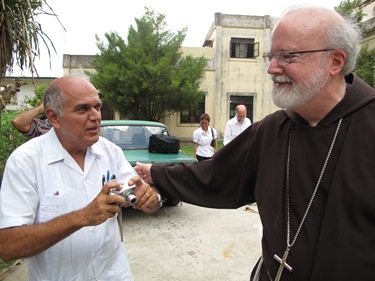
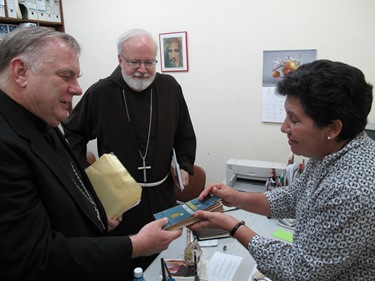
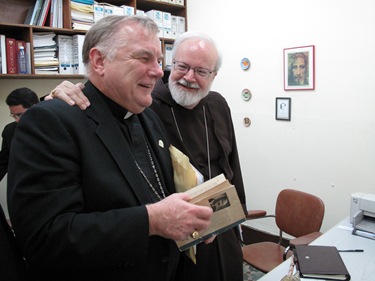
Last week, I traveled to Cuba with a delegation sent by the United States Conference of Catholic Bishops. Father Andrew Small, the secretary for Latin America who administers the annual collection to help projects in the churches in that part of the world, was in charge of this delegation.

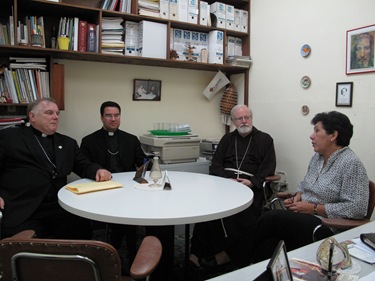
The delegation was made up of Bishop Oscar Cantú, the Auxiliary Bishop of San Antonio; Bishop Thomas Wenski, who is the chairperson of the bishop’s Migration and International Policy Committee; and I as a member of the committee on Latin America. My secretary, Father Jonathan Gaspar also accompanied us as staff.

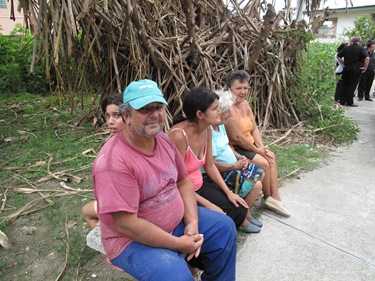
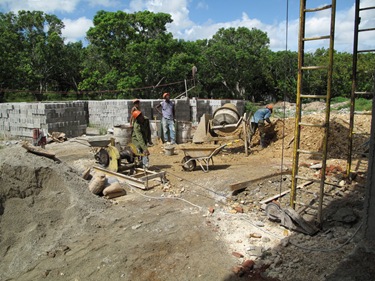
We were there to give support to the local bishops and to become acquainted first-hand with how the aid we sent after last year’s three hurricanes and two tropical storms is being used. We also sought to better understand what their future needs are.
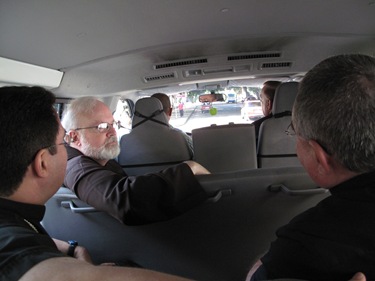
A delegation of three U.S. Catholic bishops, including Cardinal Seán P. O’Malley visits Cuba on behalf of the U.S. Conference of Catholic Bishops, August 17-21, 2009.


A delegation of three U.S. Catholic bishops, including Cardinal Seán P. O’Malley visits Cuba on behalf of the U.S. Conference of Catholic Bishops, August 17-21, 2009.

  A delegation of three U.S. Catholic bishops, including Cardinal Seán P. O’Malley visits Cuba on behalf of the U.S. Conference of Catholic Bishops, August 17-21, 2009.

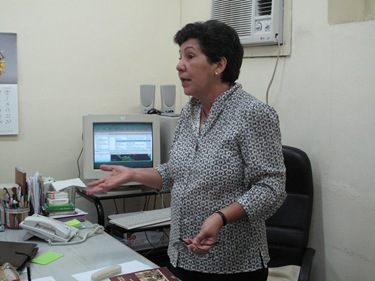
We had meetings with the bishops, lay leaders and the staff from Caritas Cubana, the Church organization in Cuba which helps the sick and the elderly and also provides emergency relief services.
A delegation of three U.S. Catholic bishops, including Cardinal Seán P. O’Malley visits Cuba on behalf of the U.S. Conference of Catholic Bishops, August 17-21, 2009.


A delegation of three U.S. Catholic bishops, including Cardinal Seán P. O’Malley visits Cuba on behalf of the U.S. Conference of Catholic Bishops, August 17-21, 2009.

A delegation of three U.S. Catholic bishops, including Cardinal Seán P. O’Malley visits Cuba on behalf of the U.S. Conference of Catholic Bishops, August 17-21, 2009.

A delegation of three U.S. Catholic bishops, including Cardinal Seán P. O’Malley visits Cuba on behalf of the U.S. Conference of Catholic Bishops, August 17-21, 2009.

A delegation of three U.S. Catholic bishops, including Cardinal Seán P. O’Malley visits Cuba on behalf of the U.S. Conference of Catholic Bishops, August 17-21, 2009.

I want to mention that here in Boston there is an organization, The Friends of Caritas Cubana, that supports their efforts. Each year there is a fundraiser at the home of Consuelo Isaacson, and usually a member of Caritas or one of the Cuban bishops will attend.

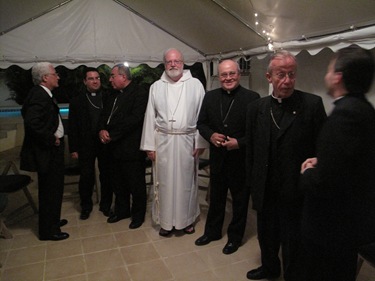
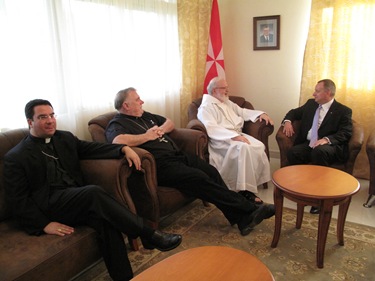
While in Havana we also met with the ambassador to the Order of Malta. The order of Malta has diplomatic relations with 60 countries, including Cuba. The Order is involved in programs to help the elderly and to provide medicine and food for people there.

There is a large group of Cuban members of the Order in Miami, but they actually have an ambassador in Cuba itself, a Polish gentleman named Przemyslaw Häuser. He invited us one night for dinner at his embassy, and we had some very interesting discussions. He was a very close friend of Pope John Paul II and Cardinal Stanislaus Dziwisz, Pope John Paul II’s secretary for many, many years. In Poland, he was a filmmaker who made films about the Vatican and about John Paul II.
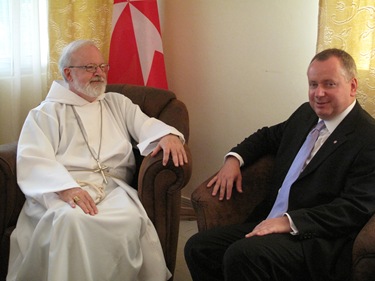
A delegation of three U.S. Catholic bishops, including Cardinal Seán P. O’Malley visits Cuba on behalf of the U.S. Conference of Catholic Bishops, August 17-21, 2009.

A delegation of three U.S. Catholic bishops, including Cardinal Seán P. O’Malley visits Cuba on behalf of the U.S. Conference of Catholic Bishops, August 17-21, 2009.

A delegation of three U.S. Catholic bishops, including Cardinal Seán P. O’Malley visits Cuba on behalf of the U.S. Conference of Catholic Bishops, August 17-21, 2009.

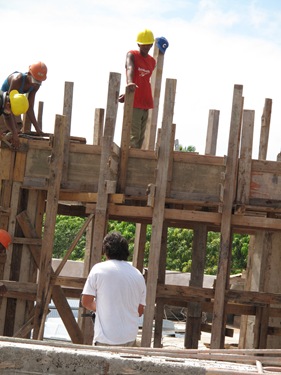
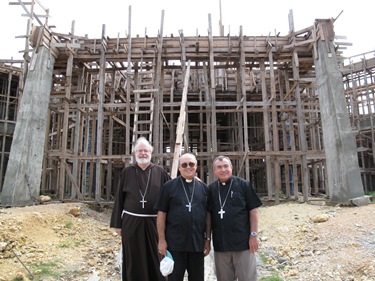
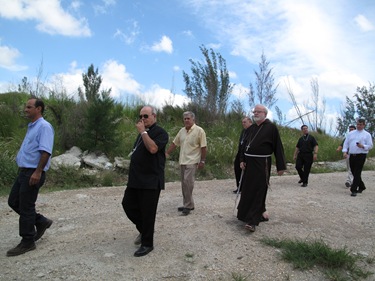
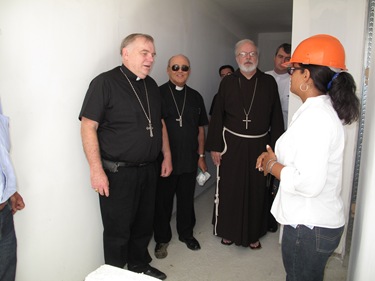
The last time I visited Cuba was when I was visitator to the seminaries. The present seminary for Havana is in the old archbishop’s palace, which was connected to the cathedral and a very inadequate facility for a seminary. There are 60-70 people camped out in this old episcopal residence that is not in the best shape. I was able to visit the site of the new seminary, which will hopefully be opened next year. That project was begun with donations from a benefactor here in Boston.
A delegation of three U.S. Catholic bishops, including Cardinal Seán P. O’Malley visits Cuba on behalf of the U.S. Conference of Catholic Bishops, August 17-21, 2009.

A delegation of three U.S. Catholic bishops, including Cardinal Seán P. O’Malley visits Cuba on behalf of the U.S. Conference of Catholic Bishops, August 17-21, 2009.

A delegation of three U.S. Catholic bishops, including Cardinal Seán P. O’Malley visits Cuba on behalf of the U.S. Conference of Catholic Bishops, August 17-21, 2009.

A delegation of three U.S. Catholic bishops, including Cardinal Seán P. O’Malley visits Cuba on behalf of the U.S. Conference of Catholic Bishops, August 17-21, 2009.

A delegation of three U.S. Catholic bishops, including Cardinal Seán P. O’Malley visits Cuba on behalf of the U.S. Conference of Catholic Bishops, August 17-21, 2009.

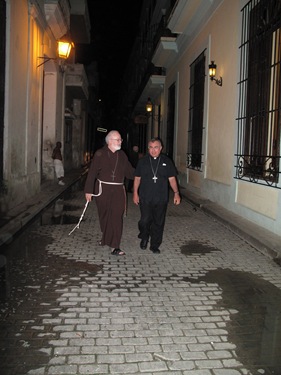
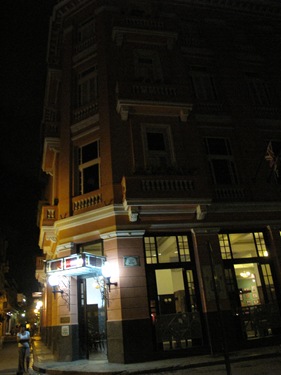
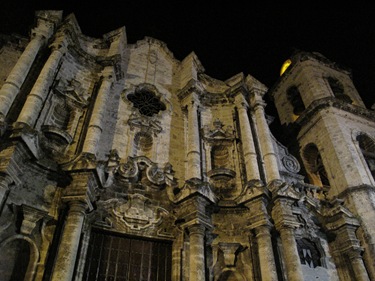
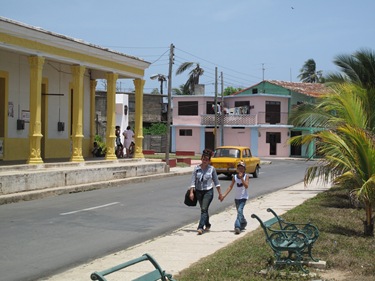
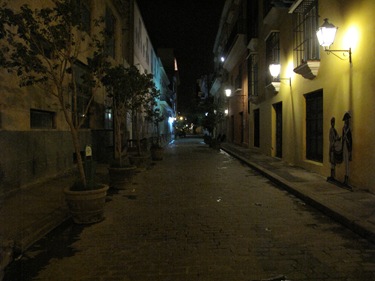
Monday night we toured Havana. It was interesting to see how the government has begun to fix up the old city, which is magnificent. Many people, I am sure, have seen the old city in San Juan, Puerto Rico and how beautiful that is. This is something comparable but much larger, with many more plazas and buildings.
A delegation of three U.S. Catholic bishops, including Cardinal Seán P. O’Malley visits Cuba on behalf of the U.S. Conference of Catholic Bishops, August 17-21, 2009.


A delegation of three U.S. Catholic bishops, including Cardinal Seán P. O’Malley visits Cuba on behalf of the U.S. Conference of Catholic Bishops, August 17-21, 2009.

A delegation of three U.S. Catholic bishops, including Cardinal Seán P. O’Malley visits Cuba on behalf of the U.S. Conference of Catholic Bishops, August 17-21, 2009.

A delegation of three U.S. Catholic bishops, including Cardinal Seán P. O’Malley visits Cuba on behalf of the U.S. Conference of Catholic Bishops, August 17-21, 2009.

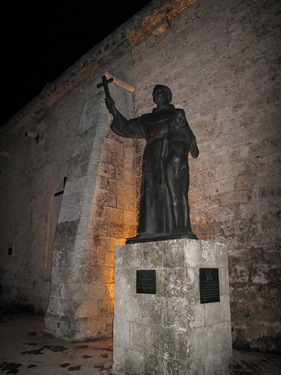
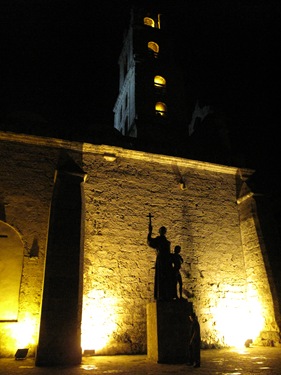
One of the buildings that we visited was the Franciscan church that Father Junípero Serra stayed at on his way to found the missions in California. There is also a plaza and a statue of Our Lady of Pilar, Where the first Mass in the island was celebrated. 

A delegation of three U.S. Catholic bishops, including Cardinal Seán P. O’Malley visits Cuba on behalf of the U.S. Conference of Catholic Bishops, August 17-21, 2009.

 A delegation of three U.S. Catholic bishops, including Cardinal Seán P. O’Malley visits Cuba on behalf of the U.S. Conference of Catholic Bishops, August 17-21, 2009.

 A delegation of three U.S. Catholic bishops, including Cardinal Seán P. O’Malley visits Cuba on behalf of the U.S. Conference of Catholic Bishops, August 17-21, 2009.

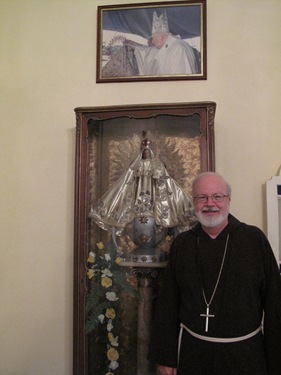
Nuestra Señora de la Caridad del Cobre, the Patroness of Cuba

In restoring the old city, the government is looking to prepare for a jump in the tourist industry. Right now, the largest group of people visiting Cuba are from Canada. The second largest group are Cuban Americans since the government has opened up somewhat and is allowing Americans to visit their relatives there. It is very difficult for other Americans to visit Cuba, and it requires a special license from the State Department.
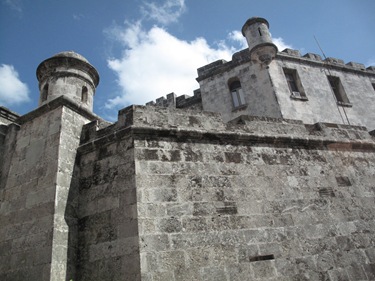
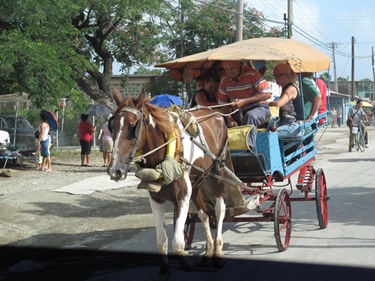
A delegation of three U.S. Catholic bishops, including Cardinal Seán P. O’Malley visits Cuba on behalf of the U.S. Conference of Catholic Bishops, August 17-21, 2009.

A delegation of three U.S. Catholic bishops, including Cardinal Seán P. O’Malley visits Cuba on behalf of the U.S. Conference of Catholic Bishops, August 17-21, 2009.

A delegation of three U.S. Catholic bishops, including Cardinal Seán P. O’Malley visits Cuba on behalf of the U.S. Conference of Catholic Bishops, August 17-21, 2009.

We had interesting meetings with representatives of the government. We discussed how relations between our two countries might improve. We talked about people’s attitudes toward the embargo.

We also spoke about the issue of political prisoners. I raised the question of Dr. Oscar Biscet who has been imprisoned and sentenced to many years, ostensibly because of his opposition to abortion in Cuba.

For their part, the Cuban government wanted to make it known they are upset with the fact that some of the wives of five Cubans who were imprisoned in the U.S. in 2001 have not been given visas to visit their husbands.

So, we had substantial discussions about difficult topics but, all in all, I think that there has been some movement.

We visited the head of the U.S. Interests Section, Jonathan Farrar — a very fine Catholic and career diplomat. It was interesting to learn, though, that he cannot leave Havana and travel to the rest of the country in the same way that the Cuban Interests Section cannot leave Washington. We spoke about things like that that could be changed as gestures of good will.
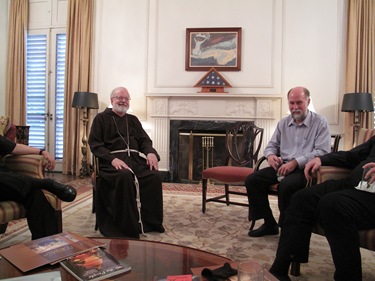
 A delegation of three U.S. Catholic bishops, including Cardinal Seán P. O’Malley visits Cuba on behalf of the U.S. Conference of Catholic Bishops, August 17-21, 2009.

With Jonathan Farrar

A delegation of three U.S. Catholic bishops, including Cardinal Seán P. O’Malley visits Cuba on behalf of the U.S. Conference of Catholic Bishops, August 17-21, 2009.

A delegation of three U.S. Catholic bishops, including Cardinal Seán P. O’Malley visits Cuba on behalf of the U.S. Conference of Catholic Bishops, August 17-21, 2009.

A delegation of three U.S. Catholic bishops, including Cardinal Seán P. O’Malley visits Cuba on behalf of the U.S. Conference of Catholic Bishops, August 17-21, 2009.

A delegation of three U.S. Catholic bishops, including Cardinal Seán P. O’Malley visits Cuba on behalf of the U.S. Conference of Catholic Bishops, August 17-21, 2009.

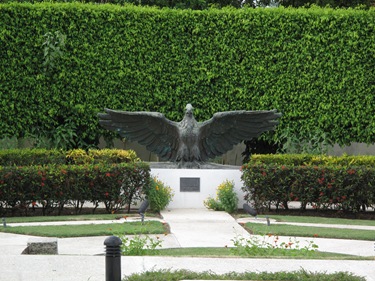
Part of the original memorial to the sinking of the USS Maine

Of course, the best way to describe the atmosphere in Cuba is one of uncertainty. People are concerned and anxious and do not know what the future is going to bring.

There have been attempts on the part of the U.S. government to lower the rhetoric in U.S.-Cuba relations. Meanwhile, the very uncomplimentary signs that used to hang in front of the U.S. Interests Section were recently ordered taken down by the Cuban government. These are both good signs of progress.

Obviously, the U.S. bishops and the Holy See have urged the lifting of the embargo many years ago. And we talked about the help that is given to the Cuban Church by the Catholics in the United States and our gratitude for that. The Catholics in Boston are really the most generous in support of these missions, which may have been one of the reasons I was asked to be part of this delegation.

I have been going to Cuba for the last 25 years at different intervals, and each time I have seen progress. Certainly, the watershed moment was the Holy Father’s visit. In fact, when I went back and visited the seminaries, 90 percent of the seminarians were converts, and they attributed their conversion to the Holy Father’s visit. The number of practicing Catholics is very limited. One of the things I raised with the government was the need for the Church to be able to build new churches in areas that have been developed since the time of the revolution where there are no places of worship.
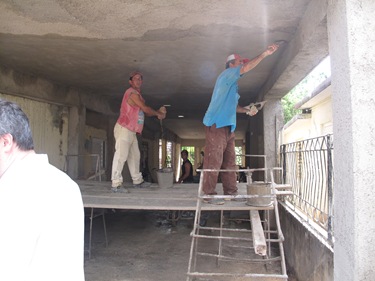
A delegation of three U.S. Catholic bishops, including Cardinal Seán P. O’Malley visits Cuba on behalf of the U.S. Conference of Catholic Bishops, August 17-21, 2009.


- – -

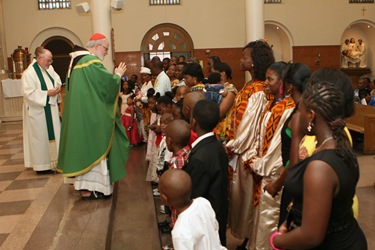
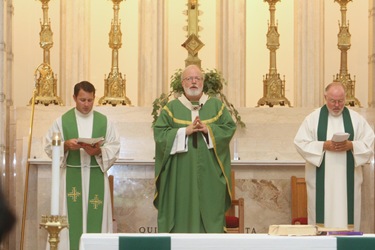
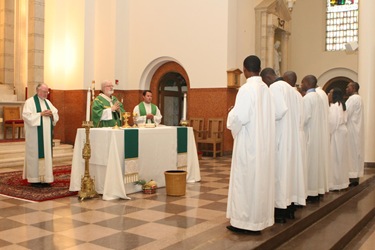
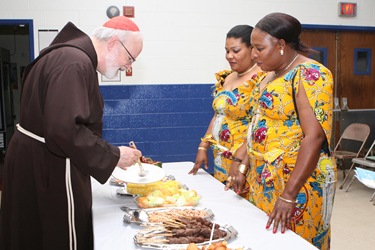
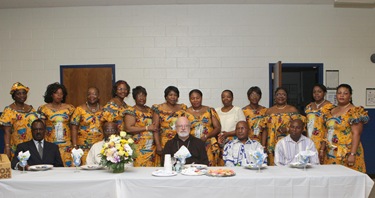
On Sunday, I had Mass for the Congolese community at St. Mary Parish in Lynn. Msgr. Paul Garrity accompanied us. We were so impressed by the college-aged men who served the Mass and the young women who formed the choir. The Mass was two hours and fifteen minutes in great part because of the singing. The whole service was very celebratory and a joy-filled expression of the Eucharist. I am very grateful to Jackie Kalonji who is the coordinator of that community.
IMG_2651email

IMG_2655email

IMG_2672email

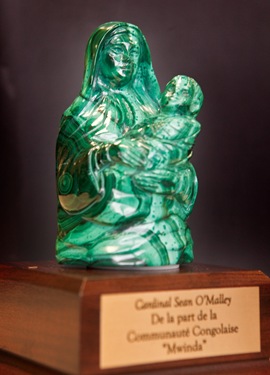
They also had a wonderful meal afterwards and they gave me a beautiful statue of Our Lady made out of green stone from the Congo called malachite.
IMG_2737email

IMG_2723email

Pilot photo by Gregory L. Tracy

- – -

This week we had an off-site retreat for our cabinet members to have an opportunity to plan and examine our priorities for the archdiocese. The question of evangelization was very central to our conversations as well. It was a very helpful session. We are so blessed to have such talented people on our cabinet.
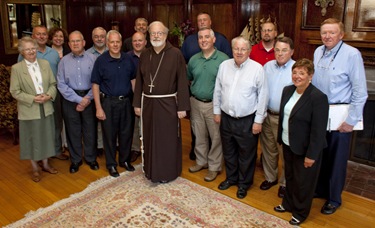
(08262009)-Dover, MA, Cabinet Retreat Members of Cardinal Seán O'Malley's Cabinet meet at the Connor's Retreat and Conference Center in Dover, MA this past Tuesday and Wednesday. The theme of the retreat was "Enlivening the Mission of the Archdiocese. Photos by George Martell

- – -

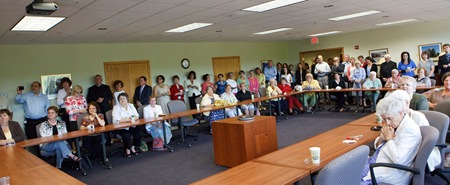
Yesterday we honored Sister Clare Bertero, the director of Religious Education, for her many decades of service that are so deeply appreciated.
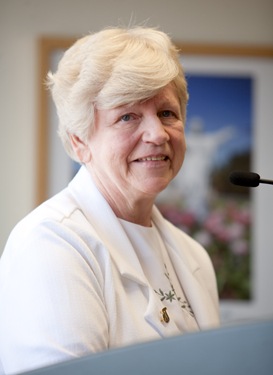
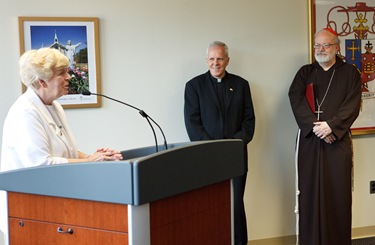
Farewell gathering for Sister Clare Bertero, Archdiocese of Boston Pastoral Center, Aug. 27, 2009. Pilot photo by Gregory L. Tracy

Farewell gathering for Sister Clare Bertero, Archdiocese of Boston Pastoral Center, Aug. 27, 2009. Pilot photo by Gregory L. Tracy

Farewell gathering for Sister Clare Bertero, Archdiocese of Boston Pastoral Center, Aug. 27, 2009. Pilot photo by Gregory L. Tracy

We were delighted to see the outpouring of affection and regard for her, not only from the people of our archdiocese but also from DREs from other dioceses throughout New England who came to thank her and to celebrate this milestone in her life.

She will be greatly missed and we wish her well.
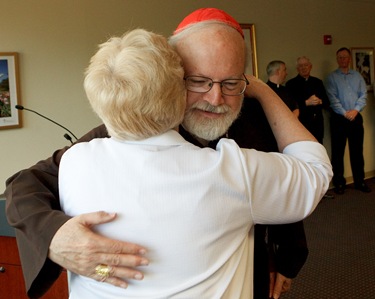
Farewell gathering for Sister Clare Bertero, Archdiocese of Boston Pastoral Center, Aug. 27, 2009. Pilot photo by Gregory L. Tracy

Adoring the Lord

Hello again!

Last Saturday, on the Feast of the Assumption, we celebrated a wonderful event: the return of Perpetual Eucharistic Adoration to the city of Boston for the first time in almost 40 years. We had a Mass at St. Clement Shrine in the Back Bay to mark the occasion.

As I have mentioned in the past, although we do have several churches in the Archdiocese where there is Perpetual Adoration, this is currently the only site in the city itself.

I have asked Tim Van Damm, one of the key organizers behind bringing Perpetual Adoration back to St. Clement’s, to share with you some of his thoughts on this important work. Tim is a very dedicated layman who has always been very generous with putting his time and talent at the service of the Church particularly with our Boston Catholic Men’s Conference. I thank Tim, the Oblates of the Virgin Mary and all those involved in this effort, which is sure to bring many graces to our Archdiocese!

- – -

timvandamm What is Eucharistic Adoration? Over the past few months, this question is one that I’ve been asked to explain to people ranging from a congregation of the faithful at a Sunday Mass to my A and P (Ashes and Palms) “Catholic” relatives, to my plaster guy who’s helping me fix up my house. I answer the question differently depending on whom I’m talking to.

When I’m speaking to the faithful, I tell them that Eucharistic Adoration is the moment of the Mass when the priest holds up the Eucharist for all to adore frozen in time. It’s as if the monstrance takes the place of the priest elevating the host and we stare in amazement at Our Lord.

Cardinal Seán P. O’Malley celebrates Mass at St. Clement Shrine in Boston’s Back Bay to mark the start of perpetual adoration on Aug. 15, 2009, the Feast of the Assumption.  Pilot photo by Gregory L. Tracy

When speaking to my relatives I remind them of the sun-shaped gold thing called a monstrance that they might have seen around Easter time or possibly when they were younger.

Cardinal Seán P. O’Malley celebrates Mass at St. Clement Shrine in Boston’s Back Bay to mark the start of perpetual adoration on Aug. 15, 2009, the Feast of the Assumption.  Pilot photo by Gregory L. Tracy

When I had the opportunity to speak to my plaster guy “Eddie”, we started with what the Eucharist was. I explained that when the priest prays over the bread and wine at the moment of consecration, that the bread and wine literally become the body and blood of Christ.

Adoration is when we sit in front of the Eucharist and pray in the way we feel most comfortable. In fact, we’re not even required to pray. We can just sit there. Just by the very action of sitting in the presence of Christ, we are changed. Eucharistic Adoration doesn’t even require believing that you’re sitting in the presence of Christ, it just requires being there.

As Eddie and I sat in the dust bowl I call a dining room, I explained to him that even if he didn’t believe that the sun would change his skin if he spent a whole day in it, whether or not he believed was irrelevant. The fact of the matter is that his skin would be changed. The same is true with adoration. We as human beings are physical and spiritual. We can’t help but being changed when we’re in the presence of God.

Many of you know that St. Clement Eucharistic Shrine in the Back Bay recently kicked off Perpetual Adoration for the first time in over forty years. You may have seen the article in the Globe or The Pilot, you may have seen one of the billboards or a poster on the T or you may just have heard about it through word of mouth.

Cardinal Seán P. O’Malley celebrates Mass at St. Clement Shrine in Boston’s Back Bay to mark the start of perpetual adoration on Aug. 15, 2009, the Feast of the Assumption.  Pilot photo by Gregory L. Tracy

Had I heard about the start of Perpetual Adoration in another parish other than my own years ago, I probably would have said something like, “Oh, that’s nice” and then went about my day without giving it much more thought. However, had I done that I would have missed something huge. I would have missed that my Archdiocese, which had gone through a period of great hurt and tribulation, was now turning to the one and only guaranteed healer, the Lord.

By making the Lord present twenty-four hours a day, seven days a week we are saying that He’s completely in charge and we trust that His grace will bring a far greater good out of the hurt and suffering that we’ve suffered in the Archdiocese of Boston. We so often hear the phrase, “The blood of the martyrs is the seed of the Church”. What could be more true?

Cardinal Seán P. O’Malley celebrates Mass at St. Clement Shrine in Boston’s Back Bay to mark the start of perpetual adoration on Aug. 15, 2009, the Feast of the Assumption.  Pilot photo by Gregory L. Tracy

We need only look back to the persecution that the early Christians experienced to see the truth in this statement. These people were literally running for their lives, yet had they not been persecuted, one might wonder how quickly Christianity would have spread. In an attempt to wipe out the faith, it was as if wind was blowing on a wildfire and the results are evident.

Cardinal Seán P. O’Malley celebrates Mass at St. Clement Shrine in Boston’s Back Bay to mark the start of perpetual adoration on Aug. 15, 2009, the Feast of the Assumption.  Pilot photo by Gregory L. Tracy

I believe that God is doing the same thing in Boston. Young and old alike are coming together in prayer and faith to adore the Lord. The hurt that we have experienced has only ignited a passion to further spread the truth and bring others to the one true faith. By bringing the Lord twenty-four hours a day, seven days a week it’s as if we’ve just tapped into a nuclear reactor. We can’t possibly fathom the power that will flow out of the reactor of the monstrance holding the Living Lord.

Cardinal Seán P. O’Malley celebrates Mass at St. Clement Shrine in Boston’s Back Bay to mark the start of perpetual adoration on Aug. 15, 2009, the Feast of the Assumption.  Pilot photo by Gregory L. Tracy

The other day I had lunch with my sister. My sister is someone who grew up in the faith but is searching in her faith journey and isn’t a regular churchgoer. As we talked I gently encouraged her to stop by and just spend a few minutes meditating in the way she felt most comfortable at St. Clement’s. She told me that she was planning on doing so. She mentioned that she liked the fact that she could go and pray or just think and there was no pressure and nobody talking. I nodded, smiled, and internally prayed that she would go.

Cardinal Seán P. O’Malley celebrates Mass at St. Clement Shrine in Boston’s Back Bay to mark the start of perpetual adoration on Aug. 15, 2009, the Feast of the Assumption.  Pilot photo by Gregory L. Tracy

The truth is that I know the Lord will speak to her in the language that she understands if she sits in His presence. I’ve been inviting people left and right to stop by and just “check it out”. I even invited Gino, the shoe shine guy who sits at the corner of Mass. Ave & Boylston Street. Just like the woman who was hemorrhaging who knew that if she just touched the hem of Jesus’ clothes, she would be healed, I know that if I can just get a person to sit in the presence of the Lord, they will be healed and so will our whole city.

Cardinal Seán P. O’Malley celebrates Mass at St. Clement Shrine in Boston’s Back Bay to mark the start of perpetual adoration on Aug. 15, 2009, the Feast of the Assumption.  Pilot photo by Gregory L. Tracy

I invite you to do the same. Bring those you love to the spiritual well that now flows twenty-four, seven at St. Clement’s. Many of the people we know and love are spiritually dying and we have the solution. Our Lord and our God waits for them daily. Bring them to Him!

In Christ,

Tim Van Damm

- – -

I’d also like to share my homily from the Mass with you:

Good morning everyone.

It is truly a glorious day when we can come together to celebrate our Blessed Mother’s triumph over death in her Assumption and to initiate once again this beautiful practice of Perpetual Adoration of the Blessed Sacrament here at St. Clement’s. We are so grateful to Father Bill Brown, to the Oblates of the Virgin Mary, to Tim Van Damm, to the Sisters for having initiated this wonderful practice here at St. Clement’s, and to all of you for your commitment and love of our Lord in the Blessed Sacrament.

Cardinal Seán P. O’Malley celebrates Mass at St. Clement Shrine in Boston’s Back Bay to mark the start of perpetual adoration on Aug. 15, 2009, the Feast of the Assumption.  Pilot photo by Gregory L. Tracy

Thirty-nine years ago this month, I celebrated my first Mass. It was the most remarkable experience of my life. I celebrated it in the convent of Poor Clares with the nuns that had Eucharistic Adoration night and day for over 100 years.

In the beautiful Basilica of Sacre Coeur in Paris, Perpetual Adoration was begun at the time of the Crimean War, and has been a constant for over a hundred years — during two World Wars, during Nazi occupation. In the midst of one of the most worldly parts of the city of Paris, Catholics are there night and day, worshipping, adoring the Blessed Sacrament.

Cardinal Seán P. O’Malley celebrates Mass at St. Clement Shrine in Boston’s Back Bay to mark the start of perpetual adoration on Aug. 15, 2009, the Feast of the Assumption.  Pilot photo by Gregory L. Tracy

Cardinal Seán P. O’Malley celebrates Mass at St. Clement Shrine in Boston’s Back Bay to mark the start of perpetual adoration on Aug. 15, 2009, the Feast of the Assumption.  Pilot photo by Gregory L. Tracy

Cardinal Seán P. O’Malley celebrates Mass at St. Clement Shrine in Boston’s Back Bay to mark the start of perpetual adoration on Aug. 15, 2009, the Feast of the Assumption.  Pilot photo by Gregory L. Tracy

Cardinal Seán P. O’Malley celebrates Mass at St. Clement Shrine in Boston’s Back Bay to mark the start of perpetual adoration on Aug. 15, 2009, the Feast of the Assumption.  Pilot photo by Gregory L. Tracy

Many years ago, when I wrote to Mother Teresa and asked her to send her sisters to our diocese in the West Indies, she wrote back announcing that the sisters were coming and she said, “And there will be one more tabernacle where the Lord will be worshipped.”

I’m sure that some of you may have seen the film, “Raiders of the Lost Ark.” Indiana Jones is one of the icons of popular kitsch and his films are very entertaining. In that film he is looking for the Ark of the Covenant.

Cardinal Seán P. O’Malley celebrates Mass at St. Clement Shrine in Boston’s Back Bay to mark the start of perpetual adoration on Aug. 15, 2009, the Feast of the Assumption.  Pilot photo by Gregory L. Tracy

Cardinal Seán P. O’Malley celebrates Mass at St. Clement Shrine in Boston’s Back Bay to mark the start of perpetual adoration on Aug. 15, 2009, the Feast of the Assumption.  Pilot photo by Gregory L. Tracy

Cardinal Seán P. O’Malley celebrates Mass at St. Clement Shrine in Boston’s Back Bay to mark the start of perpetual adoration on Aug. 15, 2009, the Feast of the Assumption.  Pilot photo by Gregory L. Tracy

Cardinal Seán P. O’Malley celebrates Mass at St. Clement Shrine in Boston’s Back Bay to mark the start of perpetual adoration on Aug. 15, 2009, the Feast of the Assumption.  Pilot photo by Gregory L. Tracy

I think that most of us fail to appreciate what a precious treasure the Ark of the Covenant was in the history of salvation. God’s people gathered around the Ark. It was the source of their strength and the way they were assured of God’s presence among them.

I’ve seen in a couple of churches where they have built the tabernacle as a replica of the Ark of the Covenant, and I always think what a beautiful idea that is. Mary, for us, is the Ark of the Covenant — and in today’s Gospel we see her as the living tabernacle.

Cardinal Seán P. O’Malley celebrates Mass at St. Clement Shrine in Boston’s Back Bay to mark the start of perpetual adoration on Aug. 15, 2009, the Feast of the Assumption.  Pilot photo by Gregory L. Tracy

In the first lesson today, we read in the Apocalypse, “God’s temple in heaven was opened, and the Ark of the Covenant could be seen in the temple.” The Ark of the Covenant contained the tablets of the law, Aaron’s rod and samples of manna — the mysterious bread from heaven.

Cardinal Seán P. O’Malley celebrates Mass at St. Clement Shrine in Boston’s Back Bay to mark the start of perpetual adoration on Aug. 15, 2009, the Feast of the Assumption.  Pilot photo by Gregory L. Tracy

Cardinal Seán P. O’Malley celebrates Mass at St. Clement Shrine in Boston’s Back Bay to mark the start of perpetual adoration on Aug. 15, 2009, the Feast of the Assumption.  Pilot photo by Gregory L. Tracy

When Israel was about to enter the Promised Land, they were ordered to march through the Jordan River. When the priests’ feet touched the water — those priests who were carrying the Ark of the Covenant — the river was rolled back and Israel crossed as if on dry land. God’s people carried the Ark into battle. David danced before the Ark. They carried it in their sojourn in the desert. They kept it in the meeting tent, and over the Ark loomed the mysterious presence of Yahweh. When the Israelites were unfaithful they lost the Ark, and the Philistines carried it into their camp and placed it next to their idol, Dagon. The idol was smashed to smithereens in the presence of the Ark.

Cardinal Seán P. O’Malley celebrates Mass at St. Clement Shrine in Boston’s Back Bay to mark the start of perpetual adoration on Aug. 15, 2009, the Feast of the Assumption.  Pilot photo by Gregory L. Tracy

Cardinal Seán P. O’Malley celebrates Mass at St. Clement Shrine in Boston’s Back Bay to mark the start of perpetual adoration on Aug. 15, 2009, the Feast of the Assumption.  Pilot photo by Gregory L. Tracy

Cardinal Seán P. O’Malley celebrates Mass at St. Clement Shrine in Boston’s Back Bay to mark the start of perpetual adoration on Aug. 15, 2009, the Feast of the Assumption.  Pilot photo by Gregory L. Tracy

Cardinal Seán P. O’Malley celebrates Mass at St. Clement Shrine in Boston’s Back Bay to mark the start of perpetual adoration on Aug. 15, 2009, the Feast of the Assumption.  Pilot photo by Gregory L. Tracy

Cardinal Seán P. O’Malley celebrates Mass at St. Clement Shrine in Boston’s Back Bay to mark the start of perpetual adoration on Aug. 15, 2009, the Feast of the Assumption.  Pilot photo by Gregory L. Tracy

Cardinal Seán P. O’Malley celebrates Mass at St. Clement Shrine in Boston’s Back Bay to mark the start of perpetual adoration on Aug. 15, 2009, the Feast of the Assumption.  Pilot photo by Gregory L. Tracy

In the New Testament, Mary is portrayed symbolically as the Ark of the Covenant. She goes to Elizabeth’s house carrying the treasure in her womb — the new manna, the new priesthood, Christ the bread-come-down-from-heaven, our Messiah. Mary is the living tabernacle at the visitation. John the Baptist hears her voice as she says, “Shalom Aleichem”, “Peace be with you”, and he leaps for joy in Elizabeth’s womb like David dancing before the Ark of the Covenant.

In the apocryphal gospels, we read about the flight into Egypt, and they recount how, as Mary passed, the idols fell at her feet and were smashed like Dagon in the Philistines’ camp.

Cardinal Seán P. O’Malley celebrates Mass at St. Clement Shrine in Boston’s Back Bay to mark the start of perpetual adoration on Aug. 15, 2009, the Feast of the Assumption.  Pilot photo by Gregory L. Tracy

Cardinal Seán P. O’Malley celebrates Mass at St. Clement Shrine in Boston’s Back Bay to mark the start of perpetual adoration on Aug. 15, 2009, the Feast of the Assumption.  Pilot photo by Gregory L. Tracy

This same Mary accompanies us on our pilgrimage and in life’s battles. And now, the Ark of the Covenant that gave us the manna, the body of Christ, is in God’s temple in heaven. The Feast of the Assumption is a day of joy — God has won, love has won, love is stronger than death. We have a mother in heaven — Mary, full of grace, was taken body and soul into heaven. She is our mother. Jesus made her so when he said to his disciples on Calvary, “Behold your mother.” We have a mother in heaven. Heaven is open. Heaven has a heart.

Cardinal Seán P. O’Malley celebrates Mass at St. Clement Shrine in Boston’s Back Bay to mark the start of perpetual adoration on Aug. 15, 2009, the Feast of the Assumption.  Pilot photo by Gregory L. Tracy

Cardinal Seán P. O’Malley celebrates Mass at St. Clement Shrine in Boston’s Back Bay to mark the start of perpetual adoration on Aug. 15, 2009, the Feast of the Assumption.  Pilot photo by Gregory L. Tracy

In today’s Gospel, we hear Mary’s prayer, “My soul magnifies the Lord.” Mary just lives to have God praised and worshipped, adored and loved. She places all her trust in God’s loving care for us. She pleads that the hungry be filled with good things. Only the hungry will be filled. If we allow other hungers to overtake us that can extinguish our hunger for God, we will never be filled.

As we inaugurate this Perpetual Adoration of the Eucharist in this shrine, we do so on the great Marian Feast when we celebrate Mary as the Ark of the Covenant, leading us on our pilgrimage to our heavenly home. Mary, the living tabernacle who carried the body of Christ and then gave Christ’s body to us so that that body can become our Eucharist.

Cardinal Seán P. O’Malley celebrates Mass at St. Clement Shrine in Boston’s Back Bay to mark the start of perpetual adoration on Aug. 15, 2009, the Feast of the Assumption.  Pilot photo by Gregory L. Tracy

One of my favorite paintings of the Blessed Virgin is one that is in St. Mary’s Church, a beautiful Keely church, in Charlestown. On the back wall, the mural depicts John the beloved disciple, the apostle, giving Holy Communion to the Blessed Virgin.

In our Eucharistic devotion, we are like Mary, contemplating and pondering all of these things in our heart. The Eucharist is the magnet that draws us together, the scattered pieces into the one body of Christ.

Cardinal Seán P. O’Malley celebrates Mass at St. Clement Shrine in Boston’s Back Bay to mark the start of perpetual adoration on Aug. 15, 2009, the Feast of the Assumption.  Pilot photo by Gregory L. Tracy

Cardinal Seán P. O’Malley celebrates Mass at St. Clement Shrine in Boston’s Back Bay to mark the start of perpetual adoration on Aug. 15, 2009, the Feast of the Assumption.  Pilot photo by Gregory L. Tracy

Cardinal Seán P. O’Malley celebrates Mass at St. Clement Shrine in Boston’s Back Bay to mark the start of perpetual adoration on Aug. 15, 2009, the Feast of the Assumption.  Pilot photo by Gregory L. Tracy

In our chapel at the Pastoral Center, we call it Bethany. At Bethany, Mary sat at Jesus’ feet while Martha complained, but Jesus reminded her that only one thing is necessary. We too need to step away from the noise and the busyness of our lives and sit at Jesus’ feet and reflect on his words, his deeds, his love. At the time of Lazarus’ resurrection, Martha says to Mary, “The Master is here and is calling you.” Those words in Latin, “Magister adest et vocat te,” we have placed over the tabernacle. Jesus is present and he is calling us to take our burdens to him, to tell him our hurts and our hopes.

Cardinal Seán P. O’Malley celebrates Mass at St. Clement Shrine in Boston’s Back Bay to mark the start of perpetual adoration on Aug. 15, 2009, the Feast of the Assumption.  Pilot photo by Gregory L. Tracy

Today, as we celebrate this great feast of the Assumption, we recall Mary’s Immaculate Conception which was her mystical baptism that allowed her to be conceived without sin. Her life of grace leads to participation in the resurrection of Christ. In our case, we are conceived in sin, but our baptism becomes for us that moment when we are incorporated into the body of Christ. And if we live our faith like Mary, we will share in the resurrection.

Cardinal Seán P. O’Malley celebrates Mass at St. Clement Shrine in Boston’s Back Bay to mark the start of perpetual adoration on Aug. 15, 2009, the Feast of the Assumption.  Pilot photo by Gregory L. Tracy

The Eucharist is the food for the journey. The Ark of the Covenant, the meeting tent where we can adore the mysterious presence of our risen Lord. At the Last Supper, Jesus gives us a commandment and a gift. He washes the feet of the disciples and says, “I give you a new commandment: that you love one another as I love you.” And then Jesus gives us Communion: the nourishment to be able to love, especially the little ones, the blind, the lame and the halt.

The social dimension of Eucharist helps us to become the body of Christ, Jesus the risen Lord, serving his brothers and sisters. When Jesus finishes the first Eucharist, he goes to the Mount of Olives and he tells his disciples, “Watch and pray.”

Cardinal Seán P. O’Malley celebrates Mass at St. Clement Shrine in Boston’s Back Bay to mark the start of perpetual adoration on Aug. 15, 2009, the Feast of the Assumption.  Pilot photo by Gregory L. Tracy

Today we come here to St. Clement’s so that this church can be for us the Cenacle, Bethany and the Mount of Olives — where disciples will come to watch and pray, to be filled with Eucharistic amazement and the strength in their hearts to be able to love and serve each other the way that Jesus loves us. Amen.