Hello and welcome!
My first event this month was a gathering of Capuchin bishops from around the world from September 10th to the 13th.
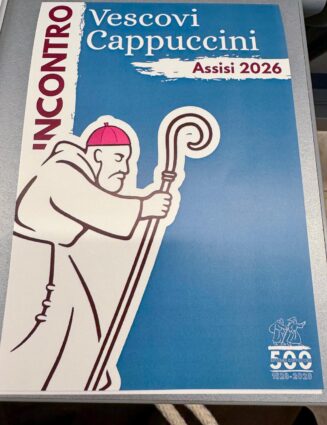
Every 5 years or so, the Father General has invited all the Capuchin bishops to such a gathering. Once it was at the tomb of Padre Pio, another time in Rome, another time in Assisi, and this year the present Superior General, Father Roberto, invited us all to Assisi. Returning to Assisi during the Jubilee Year of St. Francis was a great honor and a wonderful opportunity to experience the fraternity of so many bishops from around the world.
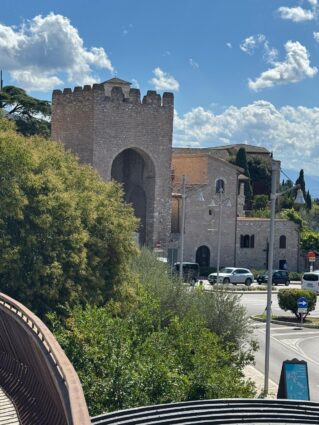
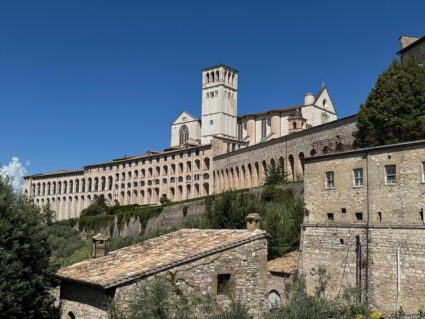
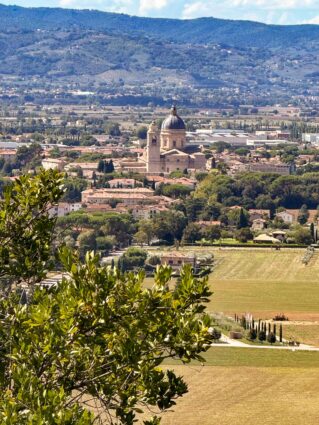
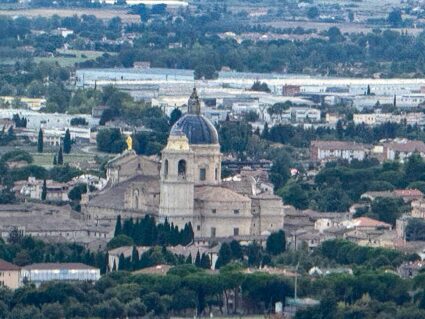
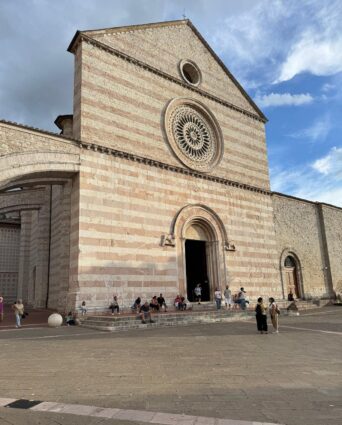
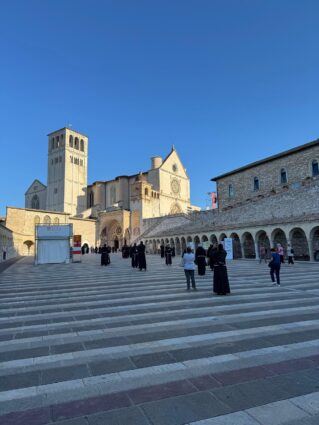
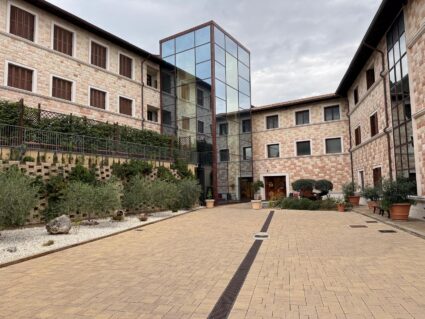
We stayed at the Capuchin retreat house there, the Domus Laetitiae, which is a wonderful facility. It’s very large, with about 100 rooms, and about 40,000 pilgrims go through there every year. The friars beautifully renovated it after the earthquake in Assisi, and it’s become a real center of pilgrimage.
I got a kick out of the name “Domus Laetitiae” because, of course, it means the “House of Joy.” But in the life of St. Francis, there’s an episode where St. Francis talks about perfect joy and says perfect joy is when you come to the monastery and knock on the door, and the brother porter comes out and says, “I don’t know who you are,” and throws you in the snow and insults you. And St. Francis says that’s perfect joy. So I’m very happy that they didn’t give us perfect joy at the Domus Laetitiae! They couldn’t have been more hospitable!
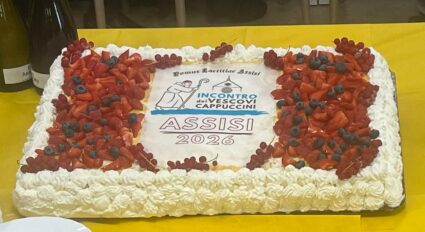
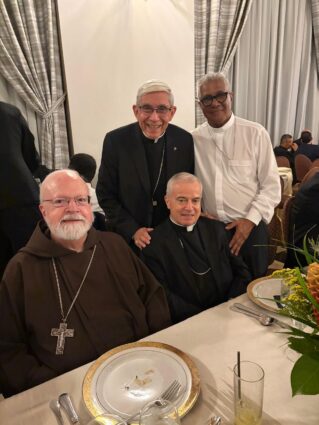
Not all the bishops could come, but there were about 50 or so of us there, along with the General Minister, the General Council, and two former General Ministers, Brother Mauro Jöhri and Brother John Corriveau, who is now a bishop.
Four of us were from the U.S.: Bishop Don Lippert, who is in Papua New Guinea; Bishop Matthew Elshoff, who is an auxiliary of Los Angeles; and Bishop Emilio Biosca, who was recently installed as Bishop of Venice, Florida.
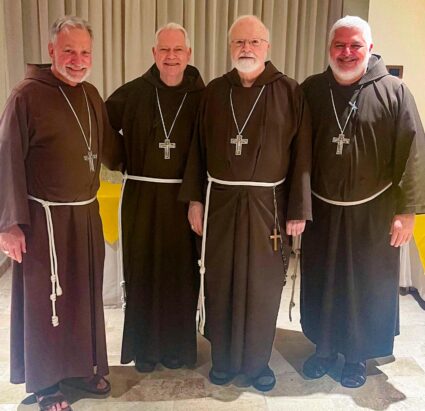
A lot of the meeting consisted of reports from the different bishops about their dioceses and apostolic vicariates.
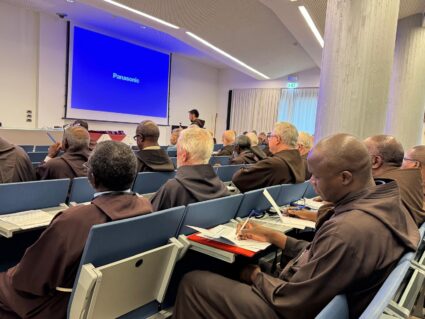
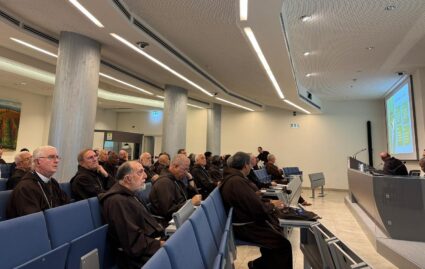
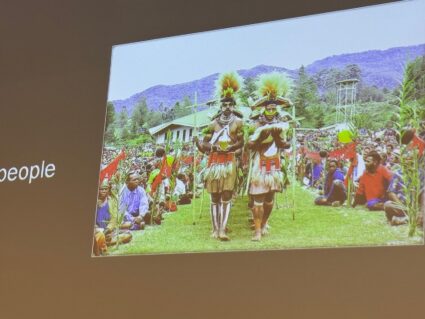
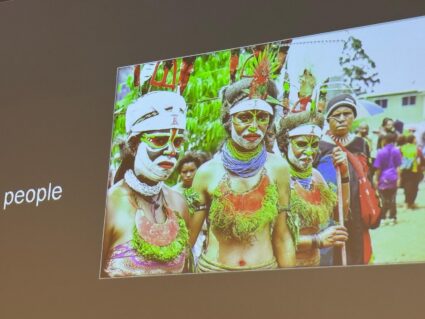
Practically all the bishops are in mission countries, in places like the Amazon or Papua New Guinea. So, it was very inspiring to hear of the Church in the “periphery of the peripheries,” and the ministry of these missionary bishops.
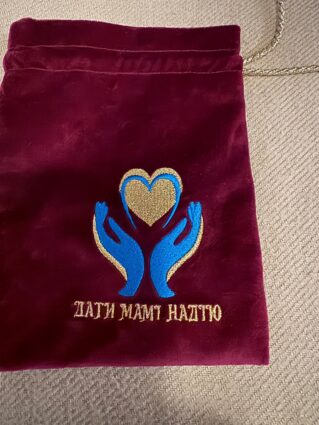
Father General very graciously presented each of us with a pectoral cross, which came in a red velvet bag that was made by Ukrainian women who have lost children or husbands in the war.
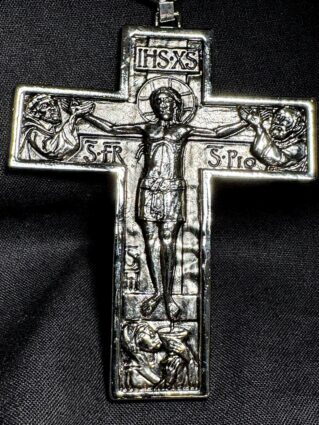 The cross is also very, very beautiful. On the right hand of Christ (looking at it, on the left) is St. Francis, and on the other side is Padre Pio. In both of these, there are the crossed arms, which is the symbol for the Franciscans: the sleeved arm of St. Francis and the bare arm of Jesus crucified crossed. At the foot of the cross is Mary with the chalice receiving the precious blood.
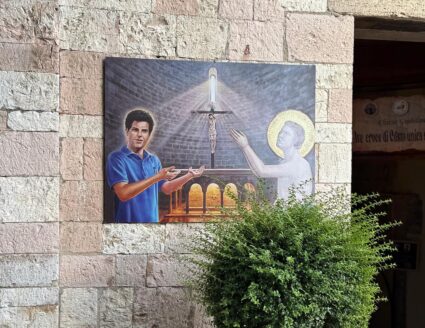
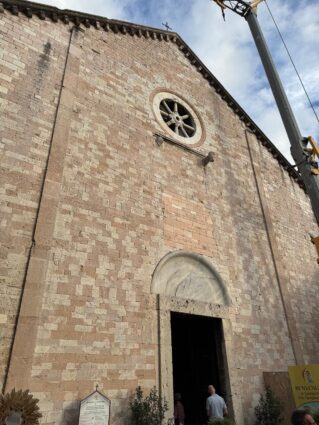
We had Mass in the Capuchin church, Santa Maria Maggiore, where Carlo Acutis is buried, which was celebrated by our Father General. That church is right next to the old episcopal palace where St. Francis was tried when he was disowned by his father and returned his clothes to his father.
The next day we had Mass in the basilica at the tomb of St. Francis, celebrated by the Bishop of Assisi, Archbishop Felice Accroca, a Franciscan scholar who lived in our Historical Institute of the Capuchins while writing his dissertation.
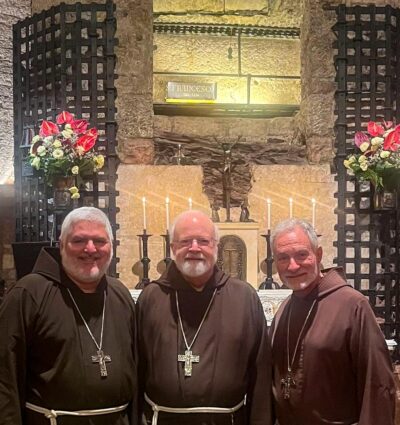
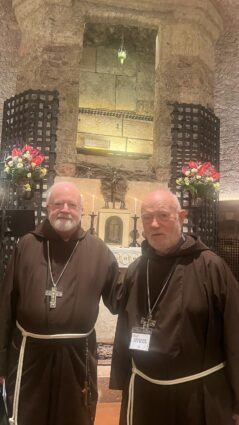
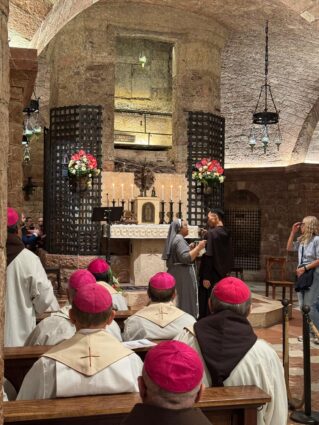
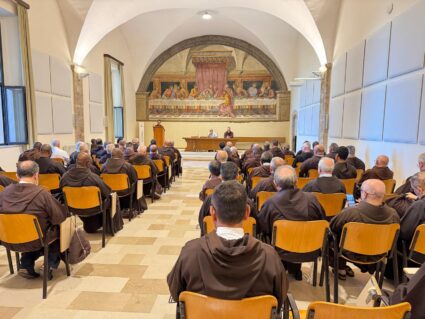
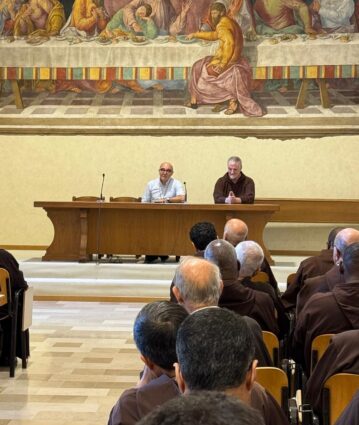
Archbishop Accroca also gave us an extraordinary talk in a hall in the Sacro Convento, which was built over the tomb of St. Francis and is actually a papal residence. In the past, when all of Central Italy was part of the Papal States, the pope would often stay there, so it’s a spectacular building. It has a beautiful conference hall with a dramatic mural of the Last Supper, and it was there that the archbishop gave us his excellent conference.
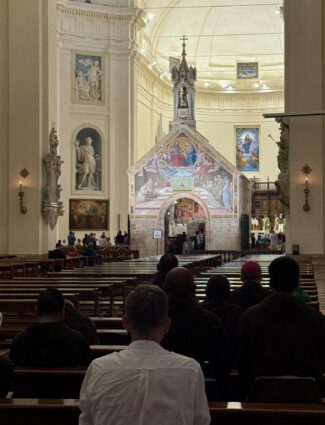
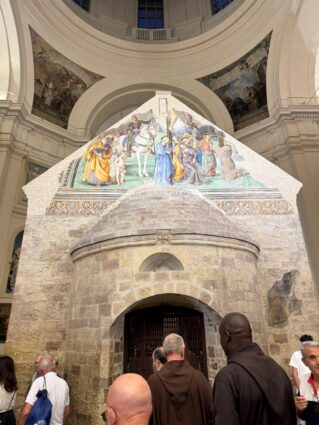
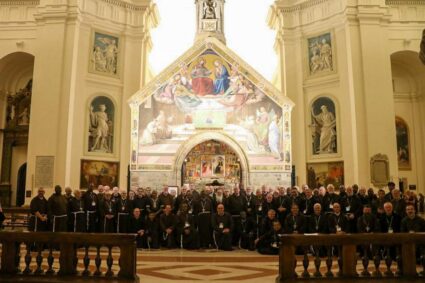
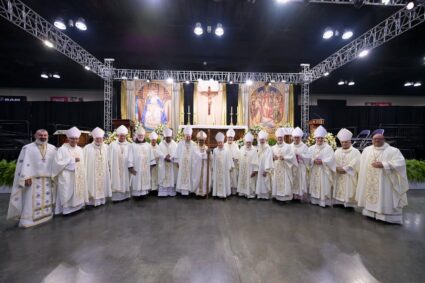
The final day began with a Mass with myself presiding, followed by Brother Mauro Jöhri’s closing address on the gift of the Capuchin bishop’s vocation. We also visited the Portiuncula and took a picture with all the Capuchin bishops in front of it.
On the way back from Assisi, we passed through Rome, where Father Sean Hurley and his mother came to see me.
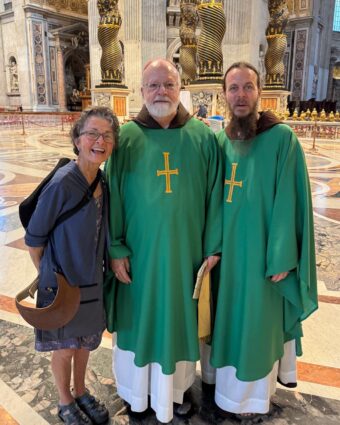
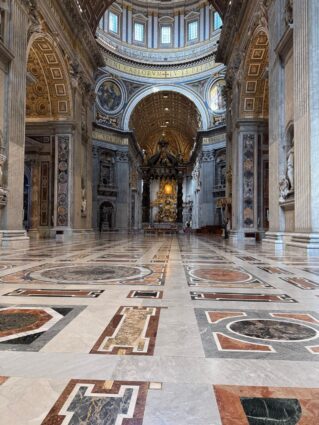
Father Sean had just made his profession as a Capuchin. He had worked with the Cape Verdeans in Boston for many years and has now joined the Cape Verdean province and did his novitiate in Northern Italy. I wasn’t able to get to the profession, but they came down to Rome. So, we had Mass in the Irish chapel underneath St. Peter’s, right near the tomb of Peter.
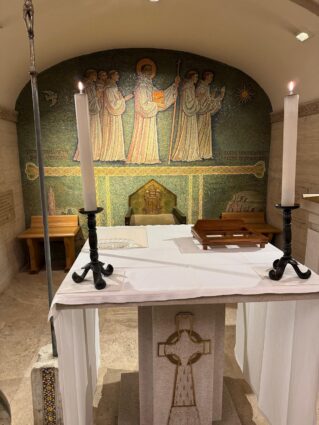
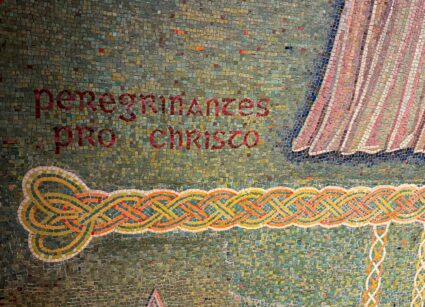
The mosaic in the chapel shows the early Irish monks who were great missionaries, and that text, “Peregrinantes Pro Christo,” in the mosaic refers to many of these Irish missionaries. It was very common in the Middle Ages for people to make a vow of pilgrimage by which they would never sleep twice in the same place, but keep moving from place to place to announce the good news of the Gospel, and they evangelized Europe.
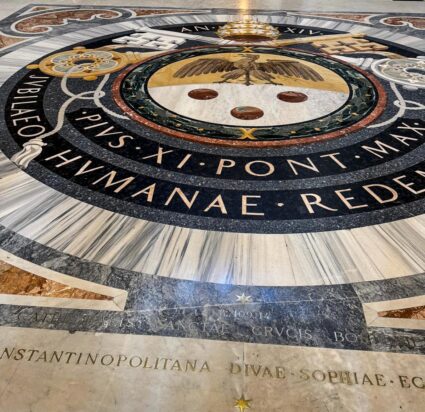
And, of course, whenever I go to St. Peter’s, I have to check and make sure they still have the marker for measurements for Holy Cross Cathedral (“Sanctae Crucis,” as you see there on the floor), showing how big our cathedral is compared to St. Peter’s.
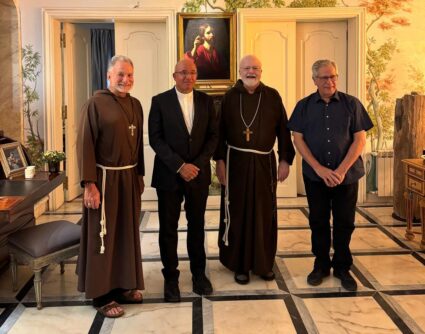
On the way to Assisi, we had also stopped in Portugal, where I visited with the new Patriarch and Father José Manuel, pastor of Santa Isabel.
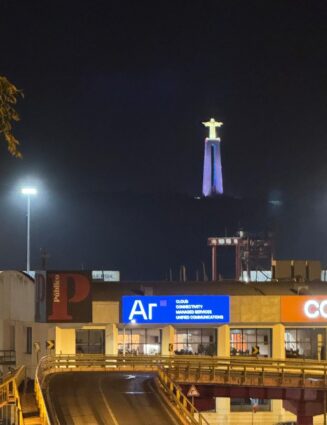
I also wanted to share with you this picture of Christ the King, which is the largest statue of Christ in Europe. It was built in imitation of the Christ the Redeemer in Rio de Janeiro, and it was put up by the women of Portugal in thanksgiving for Portugal being spared from entering World War II.
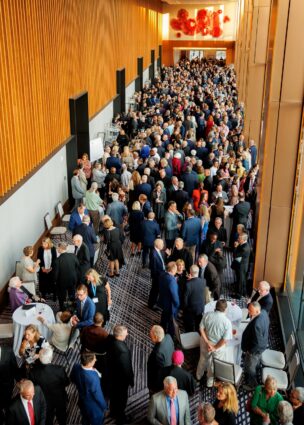
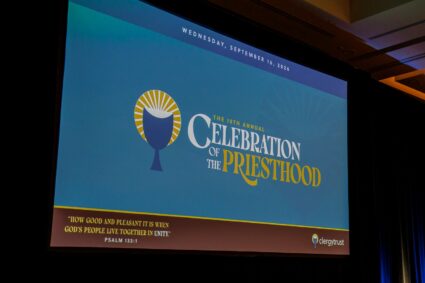
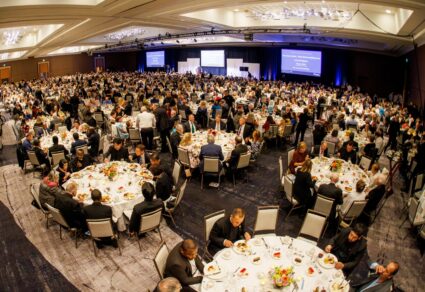
I arrived in Boston from Rome on the 16th, and that evening was the Clergy Trust’s annual Celebration of the Priesthood Dinner. It was a very beautiful celebration, as always. There were over 1,400 people, with Archbishop Henning and so many of the priests of the archdiocese.
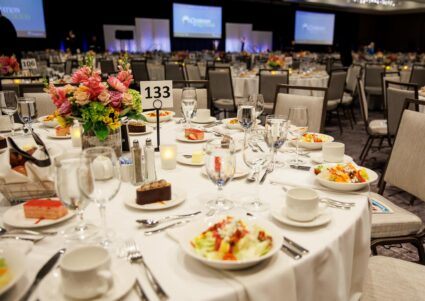
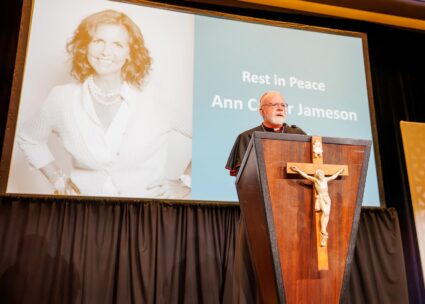
They gave Father Bill Joy the St. Joseph the Worker Award.
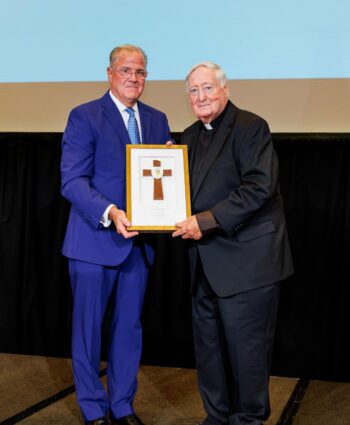
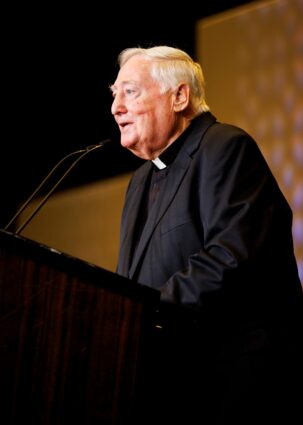
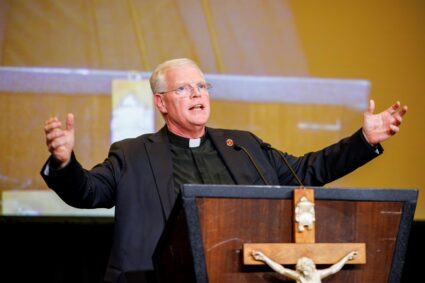
And Father Jack Butler, the new president of Boston College, gave a very beautiful witness talk.
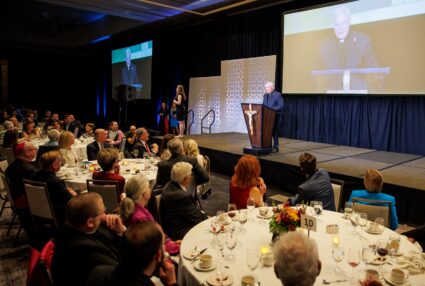
It was so encouraging to see the love and the regard that our people have for our priests, and it’s always a joy to be part of that celebration.
On the 22nd, I went to St. Louis for the beatification of Fulton Sheen. Being there for this celebration was very moving for me because of my childhood connection with Bishop Sheen.
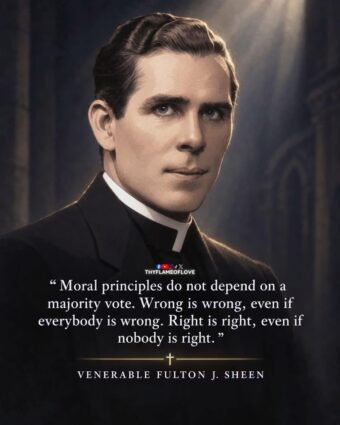
In my home parish of St. Luke’s, our pastor was Msgr. Charles McBride (whose mother was an O’Malley). Msgr. McBride served as the assistant director of the national office of the Society for the Propagation of the Faith, so he and Bishop Sheen were very close, and Bishop Sheen would often visit our parish. It was a very great privilege of mine to serve Mass for him as a child and to see him making his Holy Hour in the sacristy early in the morning.
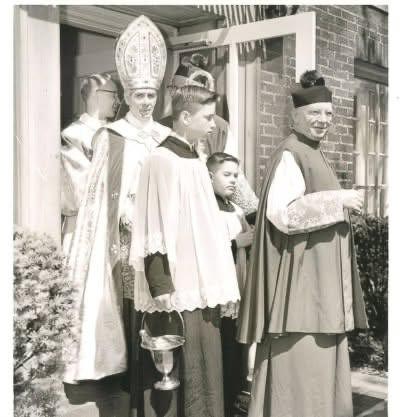
Sometimes, when he would come to the parish, it would turn into a spontaneous parish mission because, of course, in those days it was the old celebration of the Mass, and the Scriptures were never read in the vernacular except on Sunday. The priest would read them again in English before he preached, and there was never preaching during the week. But when Bishop Sheen was there, he would do both. He would read the Gospel and the Epistle again in English, and then he would preach. So the people knew that, and when they found out he was going to be in the parish, the people would come to the early morning Mass, and it would be standing room only. It was really very inspiring.
Of course, for many years, he had a radio program when he was teaching at Catholic University, but his ministry on television really made a stunning impact. Over 30 million people watched him every week, and he would get 5,000 or 6,000 letters a day. Today, we have a hundred television stations, but in those days, there were only two or three, so Americans were all watching the same thing. It was sort of a unifying cultural experience. But they say that of the 30 million that watched him, half were not Catholic. And thousands of converts found their way into the Church because of his preaching.
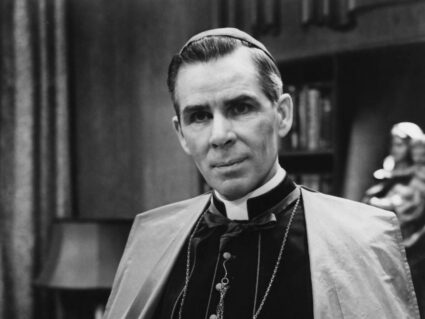
I always say it would have been impossible for John F. Kennedy to have been elected president if it had not been for the ministry of Bishop Sheen. When I was a child, we were taught that the United States could never have a Catholic president, that this was a Protestant country. And we see what that prejudice did in the life of Bishop Sheen himself. He came from an Irish Catholic family, but his father had not been a practicing Catholic and married a Protestant woman. His father started going to the Protestant church, had a daughter, and then his wife passed away.
Eventually, his father returned to the Church and married a Catholic woman, who became the mother of Bishop Sheen. But the Protestant grandparents went to court and had the little girl — Bishop Sheen’s half-sister — taken away from the father, saying that they could not tolerate their granddaughter being raised as a “papist.” The court took the child away, and Bishop Sheen hardly ever got a chance to see her. That’s the world in which we grew up.
But he changed all of that. He gave people an entirely different vision. They were so afraid of the Catholics; they thought we were superstitious and that the pope was going to come and set up camp in the White House or something like that. (But I always joke that it was Jimmy Carter who brought the pope to the White House, not some Catholic president!)
So, after Pope Leo XIV, I believe Fulton Sheen is the most important American Catholic of my lifetime. He made such an impact on the country, helping to change people’s attitudes towards Catholics and toward the Catholic Church. So I was so pleased and moved to be a part of the celebration in St. Louis and meet many of his relatives. It was just a wonderful experience.
The first event was on the 23rd, with the solemn vespers in the basilica. That’s one of the most beautiful cathedrals in the world, no doubt about that. Bishop Barron gave a beautiful homily, and Archbishop Mitch Rozanski presided.
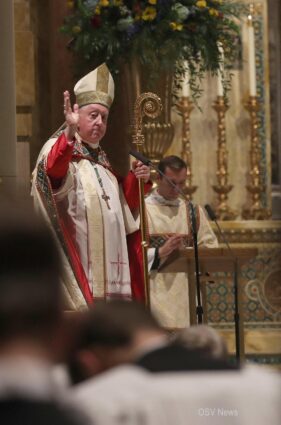
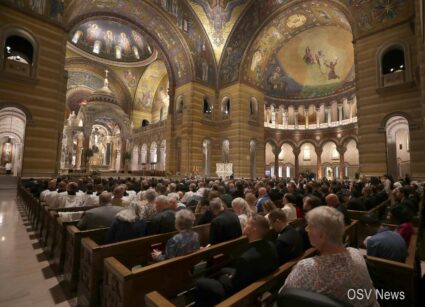
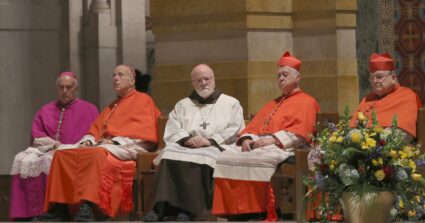
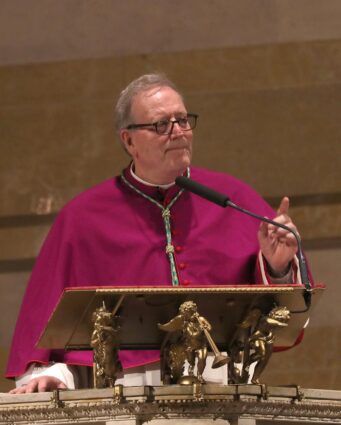
I was so happy to see that Mother Olga was able to be there, and also the Sisters of the Renewal, many of whom I know and greeted me.
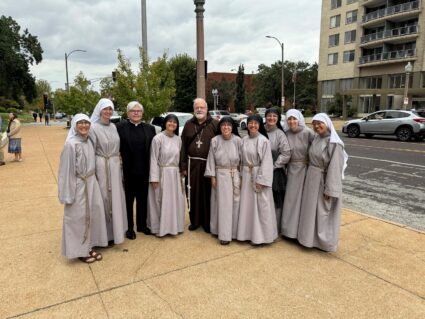
That same night, too, there was the reception for the Pontifical Mission Societies for national directors, where I gave a talk.
On the 24th was the beatification at 2:00 in the afternoon in the Dome at America’s Center.
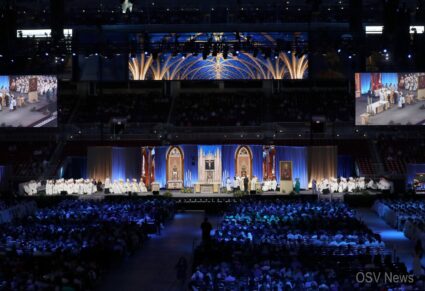
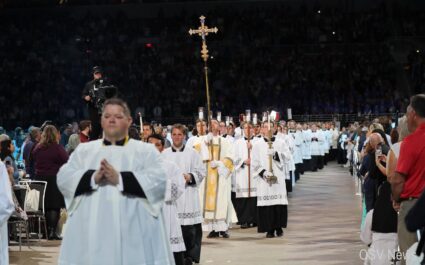
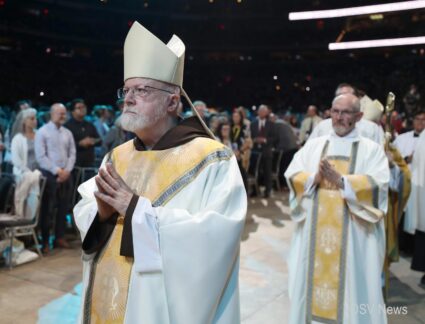
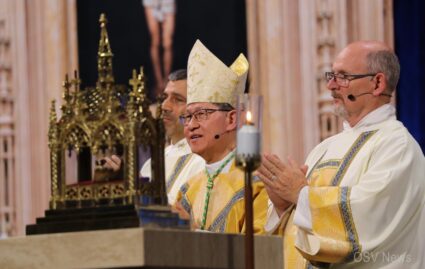
Cardinal Tagle gave a very moving, beautiful reflection in his homily as the official representative of the Holy Father. It was wonderful that the Holy Father chose a cardinal who’s in charge of the Congregation for the Evangelization of Peoples, which is connected to all the mission societies, underscoring the connection of Blessed Fulton with the missions. The beatification brought together over 50,000 people in the Dome. One of the most impressive things for all of us was how many seminarians participated—there were 900 seminarians marching in four abreast.
That night, there was another gathering of the Pontifical Mission Societies at the Augustine Institute where I also gave a talk.
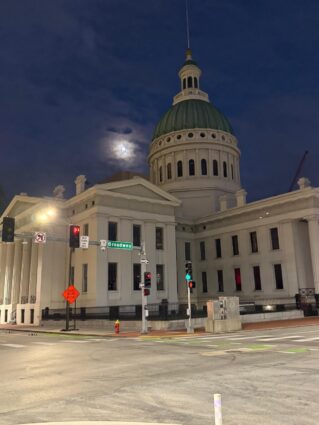
While in St. Louis, I also saw the Old Courthouse, the historic site where the case that led to the perfidious Dred Scott decision was argued.
On September 25th, I flew to New York for a meeting at the United Nations with officials of the Cuban government concerning humanitarian aid for the people of Cuba. I was accompanied by Christopher Lindquist of the U.S. Conference of Catholic Bishops and Felice Gorordo.
We are trying to see what role the Church can play in sending more aid for the Cuban people, which is being distributed very much through Catholic Relief Services and Caritas in Cuba.
From there, I went to Puerto Rico for a number of events.
The day I arrived, September 29th, was the installation of the new Archbishop of San Juan, Archbishop Eusebio Ramos, in the convention center in San Juan. Of course, the retiring bishop is Roberto González, who was at one point an auxiliary in Boston and then Bishop of Corpus Christi, Texas.
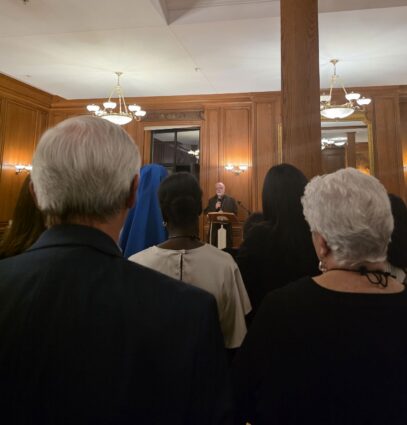
The following day, on October 1st, I received an honorary degree from the Pontifical Catholic University of Puerto Rico. The ceremony was held at the Santa María Reina Church, which is on the grounds of the campus.
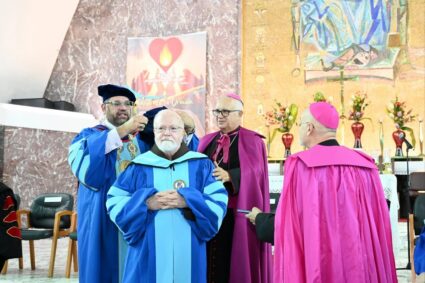
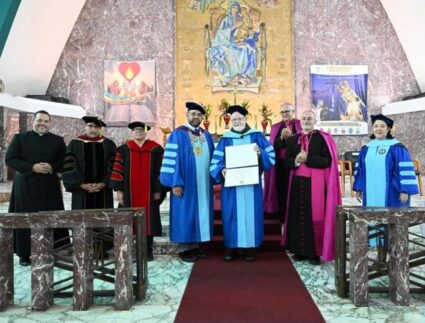
In the States, the bestowal of honorary degrees often takes place at a graduation, but in Europe and other places, such as Puerto Rico, it’s a separate ceremony. It was very moving for me. The whole bishops’ conference came, and all of the faculty, and they had their choir singing. It was a grand affair.
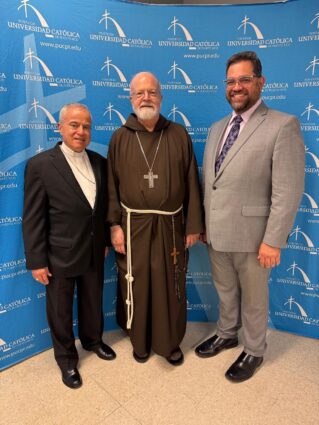
That university was founded in the territory of the Capuchin parish of San Conrado in Ponce, and it’s where my dear friend Lorenzo Albacete was president for a meteoric term. I told a story in my talk about how I was there at his installation as president, and he was in all of his ecclesiastical and academic splendor, with the robes and the scepter and everything. And he turned to me and said, “Seán, if this doesn’t work out, I can get a job with Walter Mercado!” (He was sort of the Puerto Rican Liberace.)
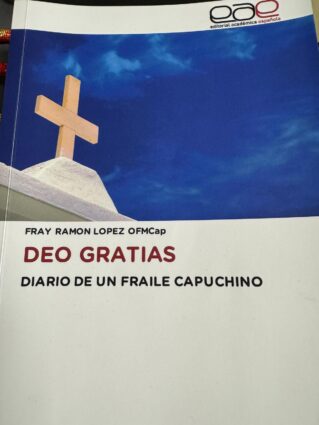
I was also part of a book launch at the Centro Capuchino for Fray Ramón López, a young friar who worked with me in Washington. He published two books: “Deo Gratias,” which is sort of his “diario íntimo,” and a book about the history of the Capuchins in Puerto Rico. Myself and Fray Alonso, a Franciscan friar who is Archbishop González’s priest secretary, gave the introductory remarks.
After that, I did an interview on Channel 13 television and this podcast.
On October 3rd, we had a Transitus celebration in the Capuchin parish of San Antonio in Río Piedras at which I preached.
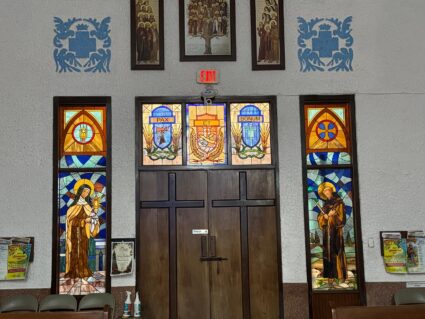
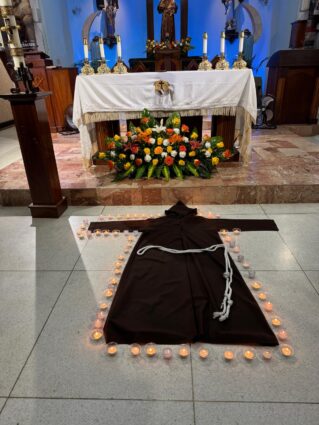 The Transitus is the eve of the Feast of St. Francis, in which we commemorate his passing, and it always consists of reading the Gospel account of Jesus’s farewell address at the Last Supper and reading from the life of Francis by Celano.
I gave the reflections, we had the prayers, and we always recite the psalm where it says “Lead me out of this prison”—the psalm that they were praying when St. Francis died. We sing the Canticle of Brother Sun (or the Canticle of Creation as they call it now) that he asked to have sung before he died. It’s a very simple ceremony, but very moving, to reenact the death scene of Francis, fulfilling his wishes. I always tell the people that the Irish love a good wake, and the Transitus is St. Francis’s Irish wake!
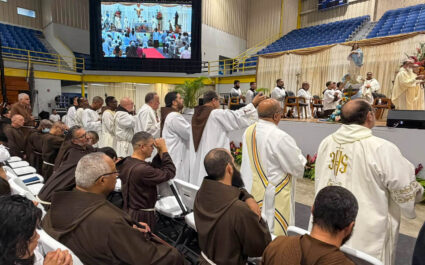
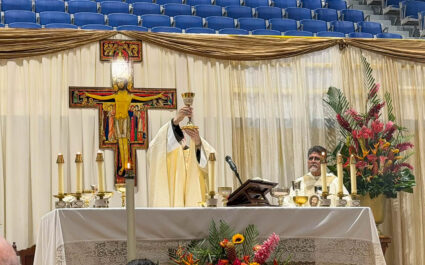
Then, on October 4th, I was the celebrant and homilist of a Mass in the sports center of the Catholic University for the 800th anniversary of St. Francis, attended by hundreds of people from all over the island. The church wasn’t big enough, so they had it in this sports complex of the university.
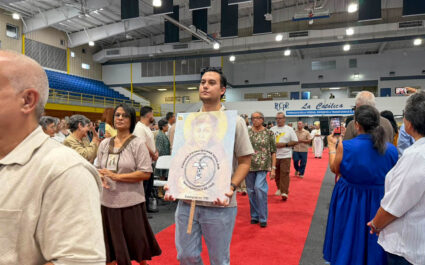
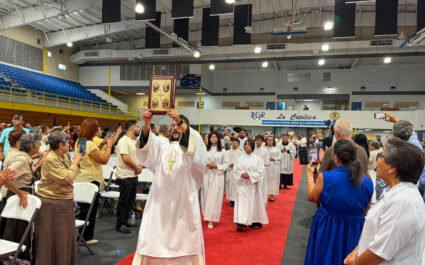
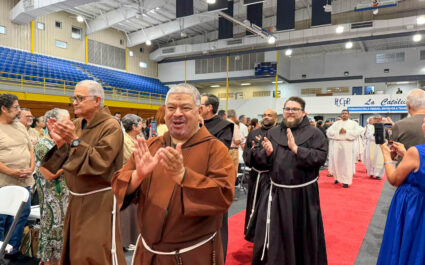
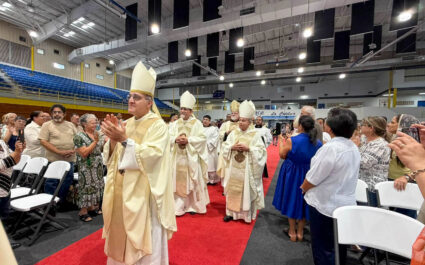
The bishops were with me, and once again, all of the friars and many of the religious women, Franciscan communities, the Third Order of St. Francis, the Capuchin Tertiary Friars (the Amigonianos), and so many secular Franciscans from all over the island were there, along with the OFMs, including Archbishop Roberto González.
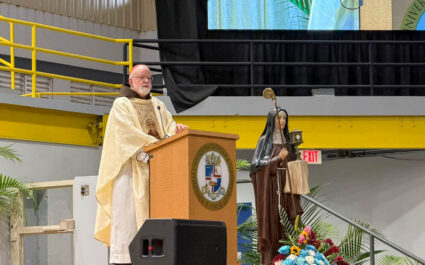
Coming back to Puerto Rico for this week brought home to me how important my relationship with Puerto Rico has been for the last 60 years. I came here in 1968, the same year “Cien Años de Soledad” was published. And when they told me I was going to a mountain village in Puerto Rico, I thought it was Macondo, a magic city in the mountains. In those days, it took about five hours to get there. Now I think you could be there in an hour, but in those days, there were no modern roads, and we even had to go on horseback to some of the chapels. But it was an extraordinary opportunity to get to know the Puerto Rican people, live among them and see their piety.
Then, for almost 10 years, I was Bishop in the Virgin Islands, which are only 40 miles away. And during the last 42 years, I have ordained most of the Capuchins here. When I came here as a subdeacon (which no longer exists in the Latin Church!), I think there were two Puerto Rican Capuchins; the rest of us were Americans or Germans. Today, there are 22 friars here, all Puerto Ricans. It’s such a blessing.
Until next time,
Cardinal Seán